<?xml version="1.0" encoding="utf-8"?>
<feed xmlns="http://www.w3.org/2005/Atom">
    <id>https://pushchain.github.io/push-chain-website/pr-preview/pr-1218/blog/</id>
    <title>Push Chain — Universal Blockchain for Apps Blog</title>
    <updated>2026-05-07T00:00:00.000Z</updated>
    <generator>https://github.com/jpmonette/feed</generator>
    <link rel="alternate" href="https://pushchain.github.io/push-chain-website/pr-preview/pr-1218/blog/"/>
    <subtitle>Push Chain — Universal Blockchain for Apps Blog</subtitle>
    <icon>https://pushchain.github.io/push-chain-website/pr-preview/pr-1218/assets/website/favicon.ico</icon>
    <entry>
        <title type="html"><![CDATA[Introducing Chain Executor Accounts (CEAs)]]></title>
        <id>https://pushchain.github.io/push-chain-website/pr-preview/pr-1218/blog/introducing-chain-executor-account/</id>
        <link href="https://pushchain.github.io/push-chain-website/pr-preview/pr-1218/blog/introducing-chain-executor-account/"/>
        <updated>2026-05-07T00:00:00.000Z</updated>
        <summary type="html"><![CDATA[This is one of our biggest security upgrades to date. Must read if you're a cross-chain user or a dev.]]></summary>
        <content type="html"><![CDATA[<p><img decoding="async" loading="lazy" alt="Cover Image of Introducing Chain Executor Accounts (CEAs)" src="https://pushchain.github.io/push-chain-website/pr-preview/pr-1218/assets/images/cover-image-ab35d52d60c69631162fb1d4ed340828.webp" width="1600" height="900" class="img_ev3q"></p>
<p>This is one of our biggest security upgrades to date. Must read if you're a cross-chain user or a dev.</p>
<p>CEAs are per-user smart accounts that live on external chains and act on your behalf while keeping your funds and unified crosschain identity separate from everyone else.</p>
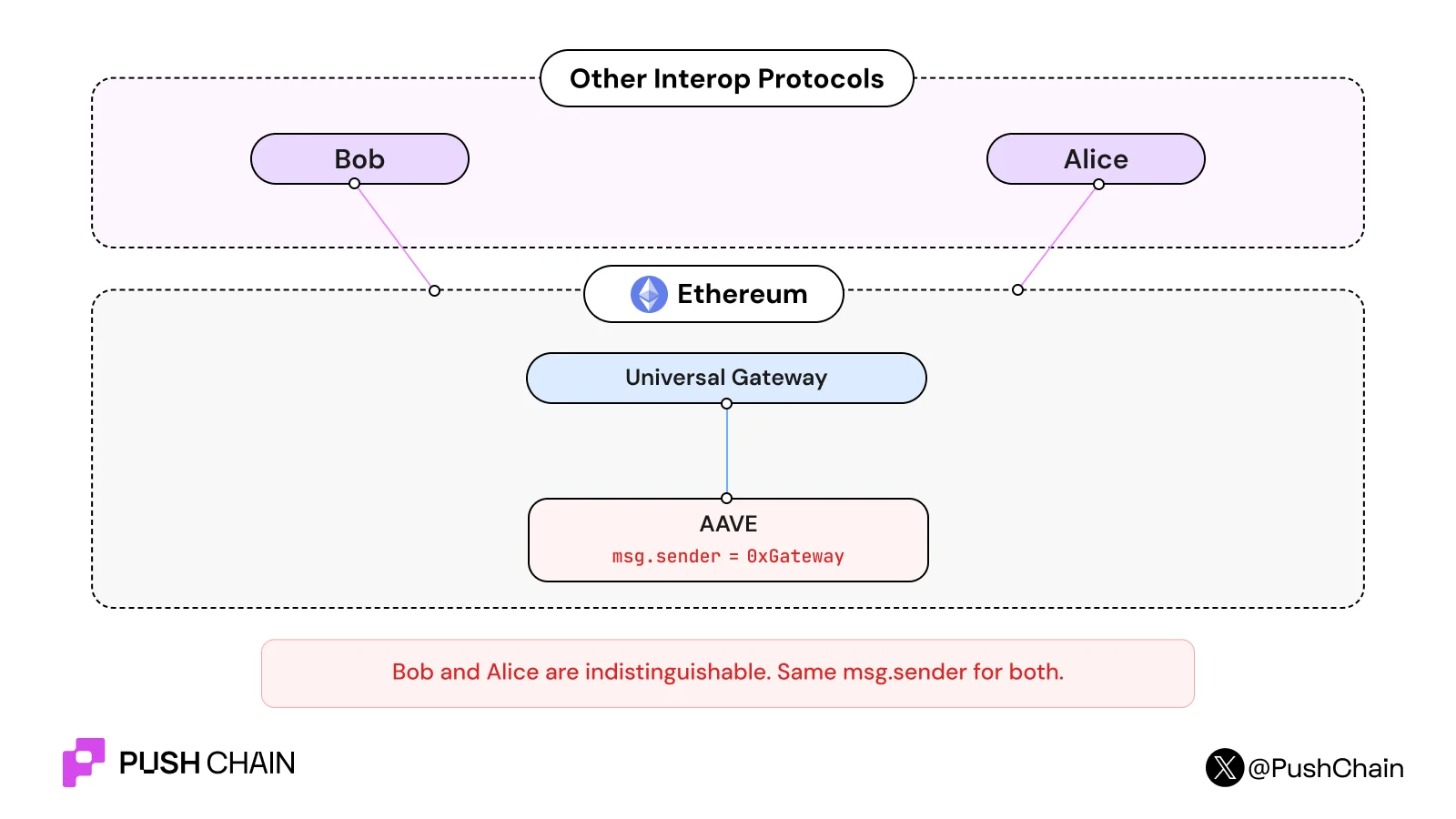
<p>Every cross-chain protocol routes your transaction through a shared gateway address.CEAs fix that by giving every user their own isolated smart account on every external chain.</p>
<p>Let's discuss about the darkest cross-chain secrets you’re probably unaware of.</p>
<p>Open any cross-chain protocol today. Bridge some tokens. Execute a swap. Deposit into a lending pool on the destination chain.</p>
<p>Now check the block explorer. Who made that deposit?</p>
<p>It's not you!
It's either a gateway contract or any other intermediary relayer contract that deposits on your behalf.</p>
<p>And not just you, all the other users are mostly sharing the same gateway address for such actions. Using the same pipeline.</p>
<p>This creates two problems, both serious enough to keep you up at night.</p>
<h2 class="anchor anchorTargetHideOnScrollNavbar_vjPI" id="identity-collapse">Identity Collapse:<a href="https://pushchain.github.io/push-chain-website/pr-preview/pr-1218/blog/introducing-chain-executor-account/#identity-collapse" class="hash-link" aria-label="Direct link to Identity Collapse:" title="Direct link to Identity Collapse:" translate="no">​</a></h2>
<p>The target protocol can't distinguish between users. Your lending position, your collateral, and all are attributed to a shared gateway address.</p>
<p><em>msg.sender = 0xGateway</em> for everyone.</p>
<h2 class="anchor anchorTargetHideOnScrollNavbar_vjPI" id="shared-custody-risk">Shared custody risk<a href="https://pushchain.github.io/push-chain-website/pr-preview/pr-1218/blog/introducing-chain-executor-account/#shared-custody-risk" class="hash-link" aria-label="Direct link to Shared custody risk" title="Direct link to Shared custody risk" translate="no">​</a></h2>
<p>Every user's funds sit under one contract.</p>
<p>A single exploit doesn't drain one user; it would drain everyone who had pooled their funds in the gateway.</p>
<p><img decoding="async" loading="lazy" alt="First Image of Introducing Chain Executor Accounts (CEAs)" src="https://pushchain.github.io/push-chain-website/pr-preview/pr-1218/assets/images/image-1-2d3e7651901ce9015455b531922c64ac.webp" width="1600" height="900" class="img_ev3q"></p>
<h1>How do CEAs work?</h1>
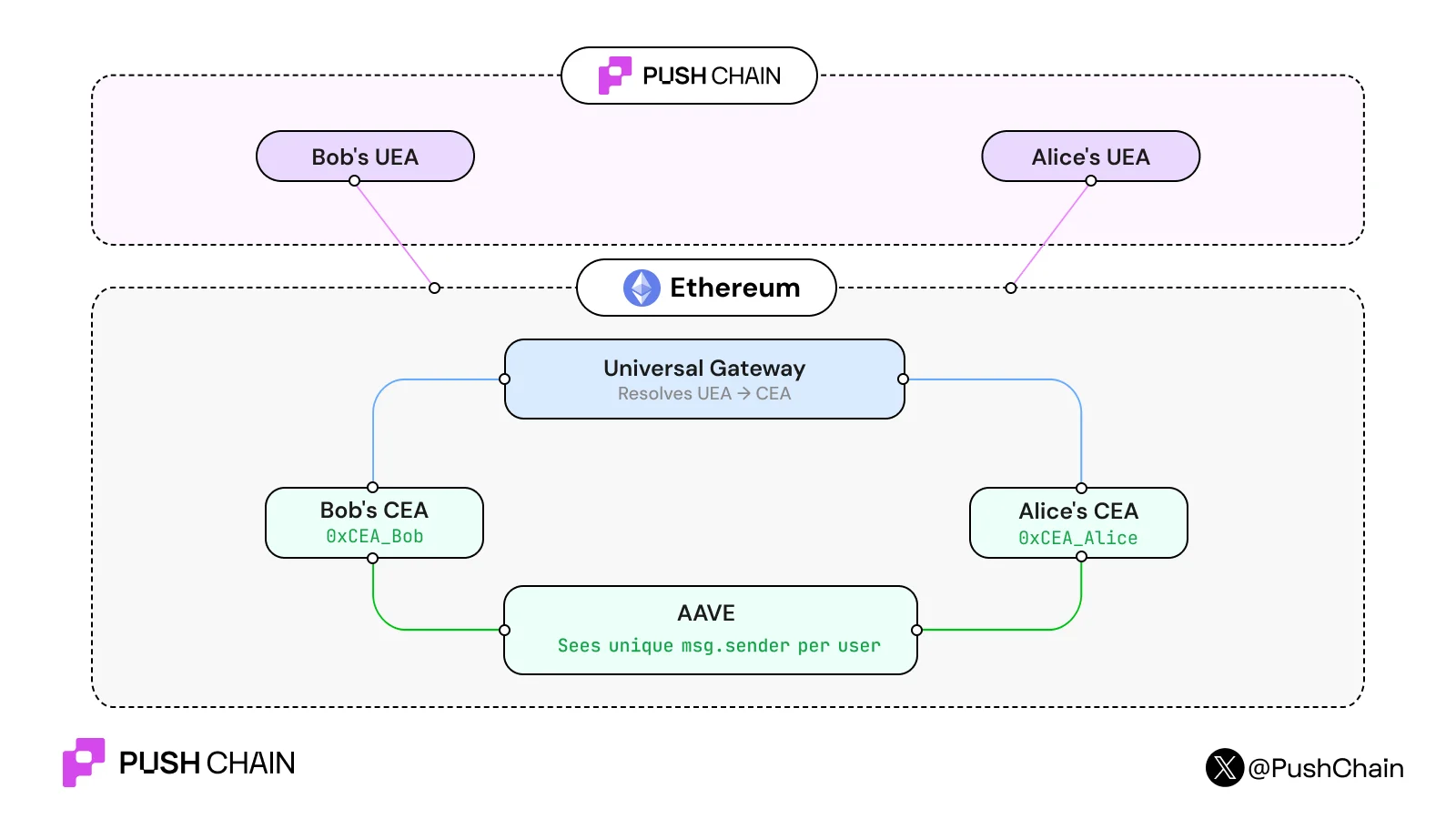
<p>A Chain Executor Account is an isolated smart account deployed on an external chain, derived deterministically from a user's UEA on Push Chain.</p>
<div class="theme-admonition theme-admonition-success admonition_xJq3 alert alert--success"><div class="admonitionHeading_Gvgb"><span class="admonitionIcon_Rf37"><svg viewBox="0 0 12 16"><path fill-rule="evenodd" d="M6.5 0C3.48 0 1 2.19 1 5c0 .92.55 2.25 1 3 1.34 2.25 1.78 2.78 2 4v1h5v-1c.22-1.22.66-1.75 2-4 .45-.75 1-2.08 1-3 0-2.81-2.48-5-5.5-5zm3.64 7.48c-.25.44-.47.8-.67 1.11-.86 1.41-1.25 2.06-1.45 3.23-.02.05-.02.11-.02.17H5c0-.06 0-.13-.02-.17-.2-1.17-.59-1.83-1.45-3.23-.2-.31-.42-.67-.67-1.11C2.44 6.78 2 5.65 2 5c0-2.2 2.02-4 4.5-4 1.22 0 2.36.42 3.22 1.19C10.55 2.94 11 3.94 11 5c0 .66-.44 1.78-.86 2.48zM4 14h5c-.23 1.14-1.3 2-2.5 2s-2.27-.86-2.5-2z"></path></svg></span>note</div><div class="admonitionContent_BuS1"><p>A <a href="https://push.org/blog/what-are-universal-executor-accounts/" target="_blank" rel="noopener noreferrer" class=""><strong>Universal Executor Account (UEA)</strong></a> is a deterministic smart account on Push Chain, derived from an origin wallet (chain namespace + chain id + owner), that serves as the execution account for that origin wallet on Push Chain.</p></div></div>
<div class="theme-admonition theme-admonition-info admonition_xJq3 alert alert--info"><div class="admonitionHeading_Gvgb"><span class="admonitionIcon_Rf37"><svg viewBox="0 0 14 16"><path fill-rule="evenodd" d="M7 2.3c3.14 0 5.7 2.56 5.7 5.7s-2.56 5.7-5.7 5.7A5.71 5.71 0 0 1 1.3 8c0-3.14 2.56-5.7 5.7-5.7zM7 1C3.14 1 0 4.14 0 8s3.14 7 7 7 7-3.14 7-7-3.14-7-7-7zm1 3H6v5h2V4zm0 6H6v2h2v-2z"></path></svg></span>Common Misconceptions</div><div class="admonitionContent_BuS1"><p>• A UEA is not a new wallet on the origin chain <br>
• No private keys are created or stored on Push Chain <br>
• UEA addresses are deterministic, but the smart account is deployed lazily on first use <br></p></div></div>
<p>In plain English: instead of everyone sharing one gateway address on Ethereum, every user gets their own contract. Bob gets Bob's CEA. Alice gets Alice's CEA. The gateway routes to them without touching the target protocol directly.</p>
<p><img decoding="async" loading="lazy" alt="Second Image of Introducing Chain Executor Accounts (CEAs)" src="https://pushchain.github.io/push-chain-website/pr-preview/pr-1218/assets/images/image-2-92fa1dfe370d219279764fe51a2c2a83.webp" width="1600" height="900" class="img_ev3q"></p>
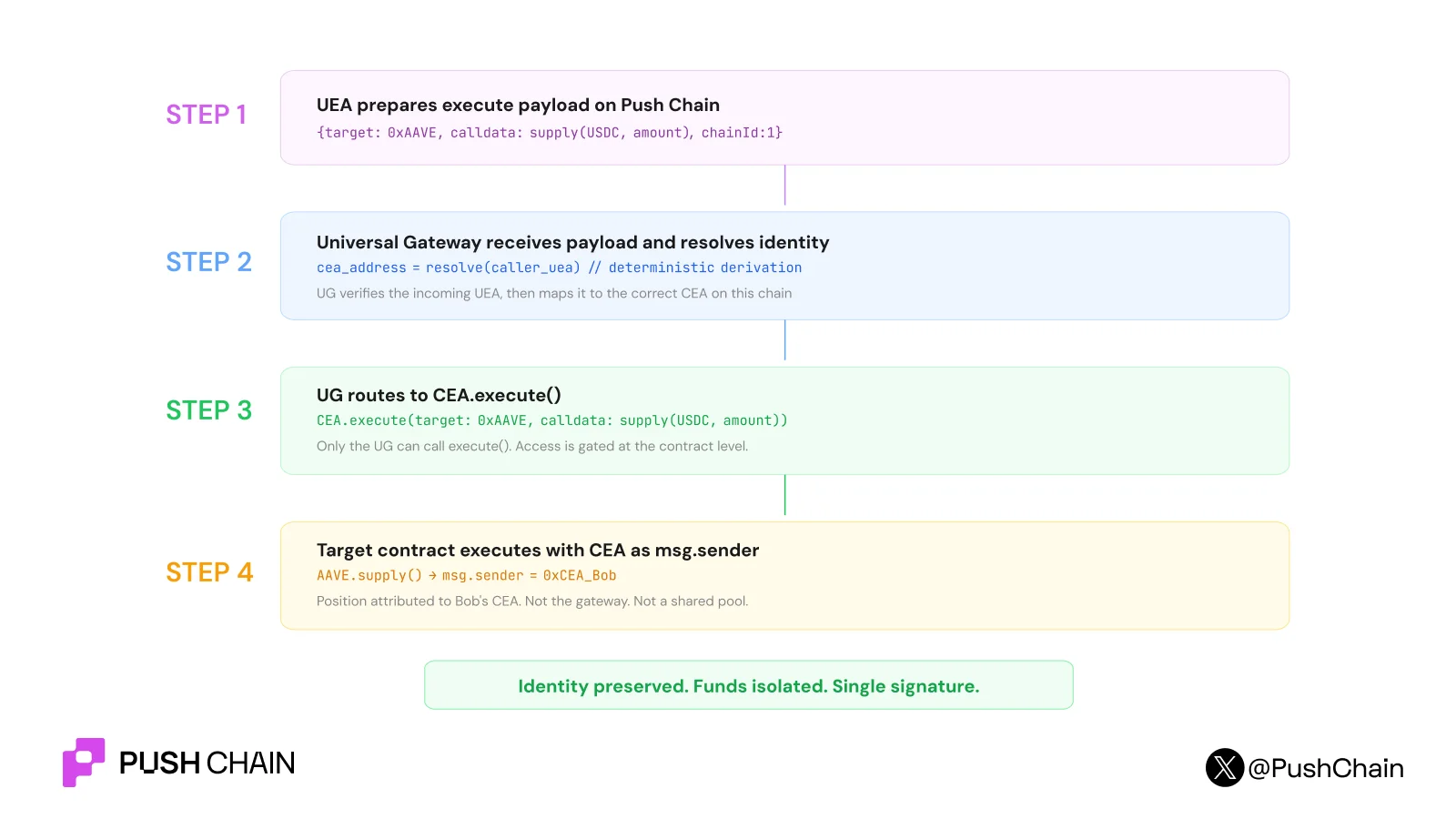
<p>Here's how the execution actually flows</p>
<p><img decoding="async" loading="lazy" alt="Third Image of Introducing Chain Executor Accounts (CEAs)" src="https://pushchain.github.io/push-chain-website/pr-preview/pr-1218/assets/images/image-3-b45fbd02987d93c9bb05bb1650be644d.webp" width="1600" height="900" class="img_ev3q"></p>
<h1></h1>
<p><strong>CEA’s objective is not only to patch the identity problem but make unified onchain identities a first-class architectural primitive.</strong></p>
<h1>How does CEA impact your security?</h1>
<p>Identity is half the story. The other half is what happens when something goes wrong.</p>
<p>Without CEA, the gateway holds every user's funds, approvals, and positions under one address. It's a single point of failure with maximum blast radius. One vulnerability in the gateway contract and every user who ever routed through it loses everything.</p>
<p><em>for instance:</em></p>
<div class="BlogTweet__TweetWrapper-sc-19ovpm5-0 guLHnR"><div class="light"><div class="react-tweet-theme root_D3qd root_Y6tr"><article class="article_kRZ8"><span class="skeleton_FMR8" style="height:3rem;margin-bottom:0.75rem"></span><span class="skeleton_FMR8" style="height:6rem;margin:0.5rem 0"></span><div style="border-top:var(--tweet-border);margin:0.5rem 0"></div><span class="skeleton_FMR8" style="height:2rem"></span><span class="skeleton_FMR8" style="height:2rem;border-radius:9999px;margin-top:0.5rem"></span></article></div></div></div>
<p>We've seen this movie before. Bridge exploits have drained over $2.5 billion since 2021. The root cause is almost always the same: shared custody.</p>
<p>CEA breaks the blast radius at the account level.</p>
<h2 class="anchor anchorTargetHideOnScrollNavbar_vjPI" id="deterministic-mapping">Deterministic Mapping<a href="https://pushchain.github.io/push-chain-website/pr-preview/pr-1218/blog/introducing-chain-executor-account/#deterministic-mapping" class="hash-link" aria-label="Direct link to Deterministic Mapping" title="Direct link to Deterministic Mapping" translate="no">​</a></h2>
<p>One UEA, one CEA per chain. The mapping is 1:1 and deterministic. If you have UEAs derived from wallets on Ethereum, Solana, and Base, you get three CEAs, one on each respective external chain. No ambiguity, no collisions.</p>
<p>Fund withdrawal. Assets locked in a CEA can always be moved back to the user's UEA on Push Chain. No funds get stuck.</p>
<h2 class="anchor anchorTargetHideOnScrollNavbar_vjPI" id="deterministic-derivation">Deterministic derivation<a href="https://pushchain.github.io/push-chain-website/pr-preview/pr-1218/blog/introducing-chain-executor-account/#deterministic-derivation" class="hash-link" aria-label="Direct link to Deterministic derivation" title="Direct link to Deterministic derivation" translate="no">​</a></h2>
<p>Each CEA is derived from its underlying UEA. One UEA maps to exactly one CEA per external chain. You can't deploy a counterfeit CEA that claims to be Bob's since the derivation is verifiable.</p>
<h2 class="anchor anchorTargetHideOnScrollNavbar_vjPI" id="strict-access-control">Strict access control<a href="https://pushchain.github.io/push-chain-website/pr-preview/pr-1218/blog/introducing-chain-executor-account/#strict-access-control" class="hash-link" aria-label="Direct link to Strict access control" title="Direct link to Strict access control" translate="no">​</a></h2>
<p><em>CEA.execute()</em> only accepts calls from the Universal Gateway on that chain. Nobody else can trigger it. Not an EOA, not another contract, not another CEA. The gateway, in turn, only routes to a CEA after resolving which UEA initiated the call. Bob's UEA can only trigger Bob's CEA. The resolution is deterministic and verifiable on-chain.</p>
<p>With CEA, a compromised account means one user is affected and not the entire user base.</p>
<p>Token approvals are scoped per-CEA. Fund isolation is structural. There's no shared pool to drain because there's no shared pool!</p>
<p><strong>One wallet. One signature. Universal identity preservation. Isolated risk.</strong></p>
<p><a href="https://push.org/docs/chain/build/understanding-universal-transactions/#chain-executor-account-cea" target="_blank" rel="noopener noreferrer" class=""><strong>Refer this integration guide</strong></a> to make your app universally accessible and secure in hours not months.</p>
<p>Got any Questions? Reach out to us via our  <a href="https://t.me/+SFD4qD1JIF1jNTk1" target="_blank" rel="noopener noreferrer" class="">Dev Telegram Chat</a> or community <a href="https://discord.com/invite/pushchain" target="_blank" rel="noopener noreferrer" class="">Discord</a>.</p>]]></content>
        <author>
            <name>Push Chain</name>
            <uri>https://x.com/PushChain</uri>
        </author>
        <category label="Technical" term="Technical"/>
        <category label="Deep Dives" term="Deep Dives"/>
    </entry>
    <entry>
        <title type="html"><![CDATA[WTF Happened to Chain Abstraction?]]></title>
        <id>https://pushchain.github.io/push-chain-website/pr-preview/pr-1218/blog/wtf-happened-to-chain-abstraction/</id>
        <link href="https://pushchain.github.io/push-chain-website/pr-preview/pr-1218/blog/wtf-happened-to-chain-abstraction/"/>
        <updated>2026-04-28T00:00:00.000Z</updated>
        <summary type="html"><![CDATA[In Web3, the narrative always ships before the product. The product ships after the community leaves.]]></summary>
        <content type="html"><![CDATA[<p><img decoding="async" loading="lazy" alt="Cover Image of WTF Happened to Chain Abstraction?" src="https://pushchain.github.io/push-chain-website/pr-preview/pr-1218/assets/images/cover-image-fafa80a0d84eef3cb451f2a06ad99215.webp" width="1600" height="900" class="img_ev3q"></p>
<blockquote>
<p><em>In Web3, the narrative always ships before the product. The product ships after the community leaves.</em></p>
</blockquote>
<p>No matter the bear or bull market over the last decade, one sentiment in crypto has always remained true: <strong>crypto is really hard to use.</strong></p>
<div class="BlogTweet__TweetWrapper-sc-19ovpm5-0 guLHnR"><div class="light"><div class="react-tweet-theme root_D3qd root_Y6tr"><article class="article_kRZ8"><span class="skeleton_FMR8" style="height:3rem;margin-bottom:0.75rem"></span><span class="skeleton_FMR8" style="height:6rem;margin:0.5rem 0"></span><div style="border-top:var(--tweet-border);margin:0.5rem 0"></div><span class="skeleton_FMR8" style="height:2rem"></span><span class="skeleton_FMR8" style="height:2rem;border-radius:9999px;margin-top:0.5rem"></span></article></div></div></div>
<p>This is the kind of feedback we still get today from the earliest degens and builders. Imagine the tyranny that hopeful newcomers and retail users had to face!</p>
<p>The sentiment wasn't always terrible.. There was an almost euphoric time when the entire industry thought that crypto was finally fixed.</p>
<p><em>(Note the extra emphasis on "almost")</em></p>
<hr>
<h2 class="anchor anchorTargetHideOnScrollNavbar_vjPI" id="the-promise-of-chain-abstraction">The Promise of Chain Abstraction<a href="https://pushchain.github.io/push-chain-website/pr-preview/pr-1218/blog/wtf-happened-to-chain-abstraction/#the-promise-of-chain-abstraction" class="hash-link" aria-label="Direct link to The Promise of Chain Abstraction" title="Direct link to The Promise of Chain Abstraction" translate="no">​</a></h2>
<p>Sometime back in 2022, a new term was born — <strong>"Chain Abstraction"</strong></p>
<p>The promise was simple: users would interact with apps in a way where they never even had to know they were using Web3 tech. The UX would be invisible. The chain would be invisible. Users would simply use crypto apps just like they use regular apps.</p>
<p>This framing was used everywhere: pitch decks, blog posts, conference keynotes, and even token launch announcements.</p>
<p>The idea felt so intuitive, so relatable, felt as if the dream of "onboarding a billion users" was finally turning into reality!</p>
<p>Hundreds of millions in funding. Super competitive landscape. Everything was looking ideal.</p>
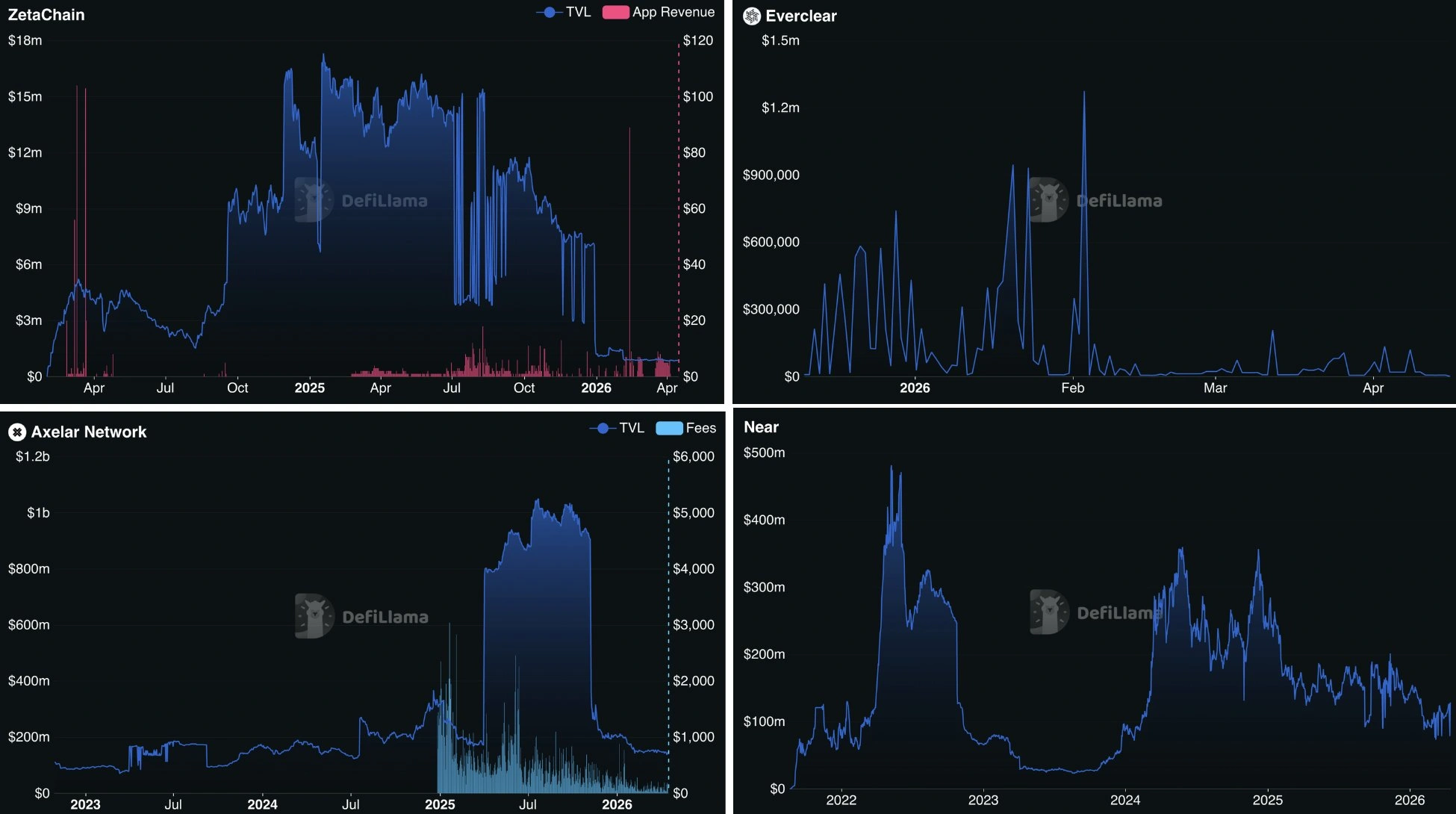
<p><strong>But today, over 90% of these projects are dead.</strong> (Quite literally)</p>
<p><img decoding="async" loading="lazy" alt="Chain abstraction graveyard" src="https://pushchain.github.io/push-chain-website/pr-preview/pr-1218/assets/images/image-1-e7f5ba6b4bbc3e4351b2dd08f95d31d6.webp" width="1950" height="1090" class="img_ev3q"></p>
<p><strong>What the fuck exactly happened to chain abstraction?</strong></p>
<p>Who pulled the plug? Was the dream of uniting all chains just a hoax? Did VCs get rickrolled?</p>
<blockquote>
<p><em>"In Web3, the narrative always ships before the product. The product ships after the community leaves."</em></p>
</blockquote>
<p>Chain abstraction was no different.</p>
<p>The idea was real. The problem was real. The money was very, very real. What wasn't real (at least not yet) was the part where any of it actually worked for the person on the other end of the screen.</p>
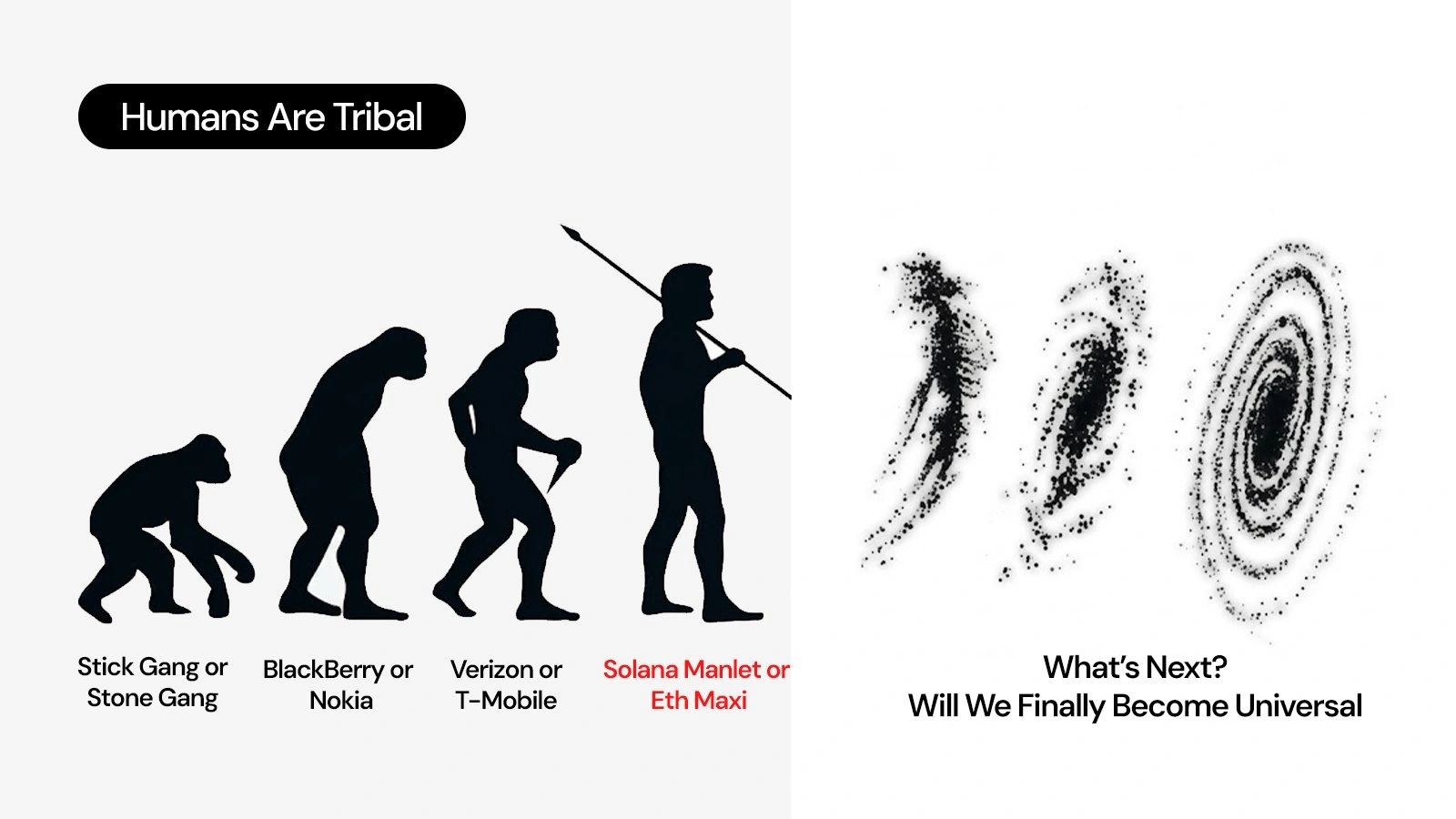
<p><img decoding="async" loading="lazy" alt="Chain abstraction meme" src="https://pushchain.github.io/push-chain-website/pr-preview/pr-1218/assets/images/image-2-b9154179c7bb50a1dffb5cf762060f76.webp" width="1600" height="900" class="img_ev3q"></p>
<hr>
<h2 class="anchor anchorTargetHideOnScrollNavbar_vjPI" id="why-abstraction-is-so-hard-to-build">Why Abstraction Is So Hard to Build<a href="https://pushchain.github.io/push-chain-website/pr-preview/pr-1218/blog/wtf-happened-to-chain-abstraction/#why-abstraction-is-so-hard-to-build" class="hash-link" aria-label="Direct link to Why Abstraction Is So Hard to Build" title="Direct link to Why Abstraction Is So Hard to Build" translate="no">​</a></h2>
<p>Because the underlying networks are financially incentivized to fight it.</p>
<p>In the early 2020s, the multi-chain world was sold as a feature. More chains meant more choice, more specialisation, more innovation.</p>
<p>What wasn't said loudly was that every new chain also meant a new token, a new ecosystem fund, and a new set of VCs with a financial interest in making sure they 10x their pot — regardless of whether anyone used the product.</p>
<p>Hundreds of L1s and L2s. Each one with its own liquidity, its own gas token, its own community convinced that theirs was the true one.</p>
<p><strong>The industry is not fragmented by accident: it's fragmented because fragmentation is profitable.</strong></p>
<hr>
<h2 class="anchor anchorTargetHideOnScrollNavbar_vjPI" id="the-intent-architecture-problem">The Intent Architecture Problem<a href="https://pushchain.github.io/push-chain-website/pr-preview/pr-1218/blog/wtf-happened-to-chain-abstraction/#the-intent-architecture-problem" class="hash-link" aria-label="Direct link to The Intent Architecture Problem" title="Direct link to The Intent Architecture Problem" translate="no">​</a></h2>
<p>Most modern chain abstraction runs on something called <strong>intent-based architecture</strong>. The user says what they want ("swap this token on Ethereum for that token on Solana") and a third party called a <strong>Solver</strong> figures out how to make it happen.</p>
<p>What could be better than completely disappearing complexity from the user's screen, right? But the truth is, the complexity does not disappear — it simply moves a few steps away from the user.</p>
<p>To execute a cross-chain intent instantly, a solver must front their own capital on the destination chain and take on immense inventory risk.</p>
<p>Now tell me, who has the capital to maintain deep liquidity across 50 different, incompatible Layer 2s? Definitely not decentralized retail users. Only massive, institutional market makers (Wintermute, Jane Street, etc.)</p>
<p>Does this mean we just abstract away a decentralised bridge and replace it with a <strong>centralized cartel?</strong></p>
<p>When market volatility spikes, these centralized solvers widen their spreads to protect themselves, or they simply stop filling intents altogether. The user's so-called "seamless" abstracted transaction either fails silently or gets hit with massive slippage!</p>
<hr>
<h2 class="anchor anchorTargetHideOnScrollNavbar_vjPI" id="the-ux-illusion">The UX Illusion<a href="https://pushchain.github.io/push-chain-website/pr-preview/pr-1218/blog/wtf-happened-to-chain-abstraction/#the-ux-illusion" class="hash-link" aria-label="Direct link to The UX Illusion" title="Direct link to The UX Illusion" translate="no">​</a></h2>
<p>From a psychological standpoint, hiding the network name doesn't solve the core anxiety of Web3.</p>
<p>To achieve chain abstraction, the industry added multiple layers of middleware (Application → Permission/Intent → Solver → Settlement). This architectural bloat increases latency.</p>
<p>If an abstracted transaction takes 45 seconds to clear because a Solver is routing it through a complex cross-chain message protocol like LayerZero, the user still experiences the cognitive friction of waiting, wondering if their funds are lost in the ether.</p>
<p><strong>Did we just paint over the rust instead of replacing the pipe?</strong></p>
<hr>
<h2 class="anchor anchorTargetHideOnScrollNavbar_vjPI" id="the-identity-problem-omnichain-networks">The Identity Problem: Omnichain Networks<a href="https://pushchain.github.io/push-chain-website/pr-preview/pr-1218/blog/wtf-happened-to-chain-abstraction/#the-identity-problem-omnichain-networks" class="hash-link" aria-label="Direct link to The Identity Problem: Omnichain Networks" title="Direct link to The Identity Problem: Omnichain Networks" translate="no">​</a></h2>
<p>Omnichain networks promise a seamless multi-chain world, but their architecture fundamentally breaks Web3's most critical component: <strong>persistent user identity.</strong></p>
<p>Because they rely on proxy signers (like Threshold Signature Schemes) to execute cross-chain actions, the destination EVM never sees who actually initiated the transaction. It only sees "who called it last" — which is the bridge's proxy address.</p>
<p>To understand why this is a major security vulnerability and a hindrance to adoption, imagine building a lending aggregator. If a user on Solana wants to route a deposit into Aave on Ethereum, they don't have a persistent Ethereum address. Even using Aave's <code>onBehalfOf</code> parameter just shifts the problem, forcing the protocol to use the relayer/gateway contract as the beneficiary.</p>
<p><strong>Now every single cross-chain user's Aave position risks getting pooled under the same proxy address!!</strong></p>
<ul>
<li class="">There is no isolated health factor.</li>
<li class="">There is no individual borrowing limit.</li>
<li class="">One user's bad cross-chain trade could trigger liquidations for everyone sharing that proxy.</li>
</ul>
<p>Which, by the way, is a big honeypot for attackers to ignore.</p>
<div class="BlogTweet__TweetWrapper-sc-19ovpm5-0 guLHnR"><div class="light"><div class="react-tweet-theme root_D3qd root_Y6tr"><article class="article_kRZ8"><span class="skeleton_FMR8" style="height:3rem;margin-bottom:0.75rem"></span><span class="skeleton_FMR8" style="height:6rem;margin:0.5rem 0"></span><div style="border-top:var(--tweet-border);margin:0.5rem 0"></div><span class="skeleton_FMR8" style="height:2rem"></span><span class="skeleton_FMR8" style="height:2rem;border-radius:9999px;margin-top:0.5rem"></span></article></div></div></div>
<p>For borrowing, it gets worse. A user with no Ethereum history cannot pre-approve credit delegation for the proxy. Because ZetaChain doesn't natively solve this, developers are forced to build incredibly complex, per-user proxy architectures just to patch the bleeding.</p>
<hr>
<h2 class="anchor anchorTargetHideOnScrollNavbar_vjPI" id="the-messaging-layer-problem-layerzero">The Messaging Layer Problem: LayerZero<a href="https://pushchain.github.io/push-chain-website/pr-preview/pr-1218/blog/wtf-happened-to-chain-abstraction/#the-messaging-layer-problem-layerzero" class="hash-link" aria-label="Direct link to The Messaging Layer Problem: LayerZero" title="Direct link to The Messaging Layer Problem: LayerZero" translate="no">​</a></h2>
<p>Protocols like LayerZero position their product as a universal messaging layer, allowing developers to build "Omnichain Applications" (OApps) that can seamlessly pass data and tokens across any network.</p>
<p>But behind the scenes, LayerZero's architecture heavily relies on off-chain Decentralized Verifier Networks (DVNs) and Executors. While marketed as modular and trust-minimized, the reality is that the underlying security is only as strong as the off-chain entities verifying the messages.</p>
<p>If a specific DVN configuration is compromised or colludes, the "immutable endpoint" on-chain is useless.</p>
<p><strong>The Contagion Risk:</strong> LayerZero connects everything to everything. If a catastrophic vulnerability is found in a low-tier connected chain, or in the messaging standard itself, the blast radius is instantly transmitted across the entire ecosystem.</p>
<div class="BlogTweet__TweetWrapper-sc-19ovpm5-0 guLHnR"><div class="light"><div class="react-tweet-theme root_D3qd root_Y6tr"><article class="article_kRZ8"><span class="skeleton_FMR8" style="height:3rem;margin-bottom:0.75rem"></span><span class="skeleton_FMR8" style="height:6rem;margin:0.5rem 0"></span><div style="border-top:var(--tweet-border);margin:0.5rem 0"></div><span class="skeleton_FMR8" style="height:2rem"></span><span class="skeleton_FMR8" style="height:2rem;border-radius:9999px;margin-top:0.5rem"></span></article></div></div></div>
<p>The official docs of LayerZero say "LayerZero is an omnichain interoperability protocol."</p>
<p>When your interop is message-based, every chain needs its own:</p>
<ul>
<li class="">Contract deployment</li>
<li class="">DVN configuration</li>
<li class="">Audit cycle</li>
</ul>
<p>LayerZero's own docs pitch <code>lzSend()</code> and <code>lzReceive()</code> functions as "one framework, every chain." But "one framework" still means deploying and maintaining that framework N times across N chains.</p>
<p>For a protocol promising omnichain composability, the developer experience scales <strong>linearly</strong> with every chain you add. Which, to me, does not sound like chain abstraction — but more like <strong>managed fragmentation.</strong></p>
<hr>
<h2 class="anchor anchorTargetHideOnScrollNavbar_vjPI" id="the-hope-that-remains">The Hope That Remains<a href="https://pushchain.github.io/push-chain-website/pr-preview/pr-1218/blog/wtf-happened-to-chain-abstraction/#the-hope-that-remains" class="hash-link" aria-label="Direct link to The Hope That Remains" title="Direct link to The Hope That Remains" translate="no">​</a></h2>
<p>Even though things aren't looking great for chain abstraction, the hope is still not lost.</p>
<p>The kind of hope that's not just coming from the users but also from devs — and most importantly from projects who're fighting all the odds to build tech that abstracts every user experience and unites every chain. No strings attached.</p>
<p><strong>All we need is one final Push.</strong></p>]]></content>
        <author>
            <name>Push Chain</name>
            <uri>https://x.com/PushChain</uri>
        </author>
        <category label="Featured" term="Featured"/>
        <category label="Thought Leadership" term="Thought Leadership"/>
    </entry>
    <entry>
        <title type="html"><![CDATA[Enable social login for your app in 4 steps]]></title>
        <id>https://pushchain.github.io/push-chain-website/pr-preview/pr-1218/blog/enable-social-logins-for-your-app/</id>
        <link href="https://pushchain.github.io/push-chain-website/pr-preview/pr-1218/blog/enable-social-logins-for-your-app/"/>
        <updated>2026-04-13T00:00:00.000Z</updated>
        <summary type="html"><![CDATA[“Most apps lose on users before they’ve ever interacted with the product."]]></summary>
        <content type="html"><![CDATA[<p><img decoding="async" loading="lazy" alt="Cover Image of The Season 3 Early Access" src="https://pushchain.github.io/push-chain-website/pr-preview/pr-1218/assets/images/cover-image-56322c86bd3a6de02f7761ab871bb626.webp" width="1600" height="900" class="img_ev3q"></p>
<p>Most apps lose on users before they’ve ever interacted with the product.</p>
<p>Not because the product feels complex to use.
Because wallet creation is considered as a separate onboarding step.</p>
<p>Push Wallet Kit removes this separation.
By provisioning a real wallet the moment a user signs up.</p>
<p>Here’s how to enable it in your app in just 4 steps:</p>
<h3 class="anchor anchorTargetHideOnScrollNavbar_vjPI" id="authentication-becomes-identity-provisioning">Authentication becomes identity provisioning<a href="https://pushchain.github.io/push-chain-website/pr-preview/pr-1218/blog/enable-social-logins-for-your-app/#authentication-becomes-identity-provisioning" class="hash-link" aria-label="Direct link to Authentication becomes identity provisioning" title="Direct link to Authentication becomes identity provisioning" translate="no">​</a></h3>
<p>Usually onboarding requires two independent systems:</p>
<p>1️⃣ Authentication based (Google, email, socials) <br>
2️⃣ Wallet creation and connection <br></p>
<p>It creates friction because users must create/import wallets before interacting with your app.</p>
<p>Push Chain combines these into a single identity layer.
When a user logs in, Push provisions a wallet automatically.
This wallet becomes the user’s persistent onchain identity.</p>
<p>Your app can now interact with the user immediately, without requiring manual wallet setup.</p>
<h3 class="anchor anchorTargetHideOnScrollNavbar_vjPI" id="step-1-install-push-wallet-kit">Step 1: Install Push Wallet Kit<a href="https://pushchain.github.io/push-chain-website/pr-preview/pr-1218/blog/enable-social-logins-for-your-app/#step-1-install-push-wallet-kit" class="hash-link" aria-label="Direct link to Step 1: Install Push Wallet Kit" title="Direct link to Step 1: Install Push Wallet Kit" translate="no">​</a></h3>
<p>npm install @pushprotocol/ui-kit</p>
<p>This will give your app access to authentication, wallet provisioning, and wallet access through one interface.</p>
<h3 class="anchor anchorTargetHideOnScrollNavbar_vjPI" id="step-2-configure-social-login-methods">Step 2: Configure social login methods<a href="https://pushchain.github.io/push-chain-website/pr-preview/pr-1218/blog/enable-social-logins-for-your-app/#step-2-configure-social-login-methods" class="hash-link" aria-label="Direct link to Step 2: Configure social login methods" title="Direct link to Step 2: Configure social login methods" translate="no">​</a></h3>
<p>Define which login methods your app should support:</p>
<p><img decoding="async" loading="lazy" alt="configure social login methods" src="data:image/webp;base64,UklGRmQkAABXRUJQVlA4WAoAAAAgAAAAUAIABAEASUNDUMgBAAAAAAHIAAAAAAQwAABtbnRyUkdCIFhZWiAH4AABAAEAAAAAAABhY3NwAAAAAAAAAAAAAAAAAAAAAAAAAAAAAAAAAAAAAQAA9tYAAQAAAADTLQAAAAAAAAAAAAAAAAAAAAAAAAAAAAAAAAAAAAAAAAAAAAAAAAAAAAAAAAAAAAAAAAAAAAlkZXNjAAAA8AAAACRyWFlaAAABFAAAABRnWFlaAAABKAAAABRiWFlaAAABPAAAABR3dHB0AAABUAAAABRyVFJDAAABZAAAAChnVFJDAAABZAAAAChiVFJDAAABZAAAAChjcHJ0AAABjAAAADxtbHVjAAAAAAAAAAEAAAAMZW5VUwAAAAgAAAAcAHMAUgBHAEJYWVogAAAAAAAAb6IAADj1AAADkFhZWiAAAAAAAABimQAAt4UAABjaWFlaIAAAAAAAACSgAAAPhAAAts9YWVogAAAAAAAA9tYAAQAAAADTLXBhcmEAAAAAAAQAAAACZmYAAPKnAAANWQAAE9AAAApbAAAAAAAAAABtbHVjAAAAAAAAAAEAAAAMZW5VUwAAACAAAAAcAEcAbwBvAGcAbABlACAASQBuAGMALgAgADIAMAAxADZWUDggdiIAADCYAJ0BKlECBQE+bTaXSKQjIiEjEimYgA2JaW78fJnHvHTDvabOf1S/R+MC+h/yPU7tvvMB5snok/yvTQepn+3PsJ/sB1rv9+yY/wz/W/yM8Bv7D+Sn9n9MfFj6I9qvUN/lvFH5z+r/6L/H+p38Y+yv4f+6/4j/k/3r2a/3f9a8U/g//E/bV8gX5P/Lf8V+bn999R/Ymah/gf896gXq/8z/1f94/w37Meff/L/4P1I/Mv6v/y/7j+R/2AfyL+nf8b/Aew3+28GH7//yPYG/of+E/av3Wf6H/t/6v/NftT7a/0P/K/+X/Rf6j5Cv5z/aP+j/hO1d6To1vPYBJfKO6pRMYyL7Z5ABZsValu76KzMRj48IU+jJtGYYa1qKAPmxMuWKjYHm3vHvuQMJXifJOyPzskbfMiNli3hlEN4Mq5dDPIv9YYUyxfSTkWwBrxBLerBeTOJ/7WOskl2yzq8xh7odXirUHeTp8Qq6Hx4pFlSQ8ijv+EinGgXKnF4LJJNElNPUrmZC3Mzl/X+v+BwAXA/W+4BCNOMCefFsFD9Zmmt6kGs8/AXRclxkmgv0GbHX6VODGUlj89oTym/5VKMF4GyolW8VNtvMohgkErW+6Mub9nwIHqNprKzmbhFvrPpUGzAy+AhQvMifjerTvnHOTPKM008DcSYDWD5H3SfHjjxykBkEEsgtoybV8EPCDf6dmsqkXsWhLDfFNMe1+2WAUeAUWQVvHLnfF/kQIiBoh5FeQ72StVLE8pSyLIK3DZl//VtpDgBXvPTn8UbcJlpAJ3wweT32+Dvgb35FnUJlyz+fCCbBvdQVAwL0VkhkEU7EGliDDBxzhycCwQp5qmMZyQfamm8tnnp+xbSYoAg9U98NLdTjMfIECFfdnHl20x9371iBXRP5BSnvG+dsX1S72S0z8O37yisWknHik73Bn1ILsyL+6qizq8xh7odXmMPdDq8xh8P9OWJOp6fbu7SEiGFWUeex76jVhI1QOXcjmdhLLj7RN0nzUc5328if/nk/vhIezhCwjTD3Q6vMYe6HV5jDyZuhn7opXjhFipukPF63M7uwbwyzua0l2yzq8xh7odXmMPbtGIKSs9wXYli+2EhlwKQrRsPBNUlwJkhoyQ0MM7+dRZnj8fjaGGrUgi7tDKEGIfUmKvQn46J4u2WdXmMPdDq8xh7odJYrniVQhG42lIKr8PX1/1ZLQ71UC3yUPhjbS9LtlnV5jD3Q6vMYe6GkxoSsW1/jWpFSuWwXT9Qir+ZxBkDVCmXbfkXlh7odXmMPdDq8xh7odXmMKwARRqNgK4IM9mwuD0IIapDR4Y95nQzZXhRKGIYaEfFfSqc01n7xC8B2UUCoNb/evdJdss6vMYe6HV5jDzZOxDOvge82HlN0K0zWku2WdXmMPdDq8v9aHGzzKCBGmHuh1eYw90OrzGHuh1akimN9kOjcDPP7Ea94X0z14B7OYdYLOyPUEgntiYtl2f74HgW6kqwlNoU6llRXmMPdDq8xh7dJOeEu+qmV4ZJEakzfvqh860gjcFlkbHJIl3oaMUrOLPy/sOb0K8PdDq8xh7odXmMKuLUXpFpAQ7jTJDp/EmEA6HV5jD3Q6vMYe6IQt2WdXmMPdDq8xh7odXmMPbYAAP7/qktljkG3qcyMWhxmAWG7G0GkzujNPeciPT2d1jsH8RMmlqAkrja8T7A0ednI1y4KxiUhcC2jAQMjl8izLDt4cSaf+cL4/NyrkzTwzUkL4eO8jrPoh8z5wTMCISZ+/6JVIiUo+l8X3bjB/7y0+v8C12fBIjzD5uSi/btBES6U2aVajMgktMP3vUFLRDb9TNaJXA0Mc64DFbeAZVP2KhgtEYv+1+J0Qm2Tas+9WX6cU7fWvpV+nlIfs96QdYkKwYRH/z7Mg+bc3nZnBjCXdETcWyJXpMW/B5rWI/GApC6QLYI2t/DdffwCQKgn780gmZwkZmr3aZ81dKlGyIMSLsJsoTyuekoLYfcv+xEVNM/4NXtfjhUgcF/pvkdi0/oz8tDMb87nPk7GgSs2MrA2SiLFCNbvwMEF71Ig/sw6mlySvZ3o2M7+uCWxgLWIffmgpXqF8BNp6556X5prtPgJyXdSxnAirKTQ9WN3IyLaG/1wp87qYAONSgEFkhT1WvGDS+IkiReocQV+XOQQZpeYa6accgBGF4haicZ/GFu/nFofQ2UlQtTEX2ql0unrxvf8xtI1FC1nx2v0G56UNMbS7CTVzN28FaAYxHjzrzMrC7cmtWBdVK9f8ZqPiqrrbM08TFOhHWrS1okVoVprdM1MtxO6CfJg4btFyvrA7sVCChH0catY5g7OqCzBSqe1qN0g6AvOiY0gYVqGVGjr6aVlhSF/7Y7D7Aw4HxqS3r/vsfxPGv6YsCHcQSnIbS1Nk67crbhyYxRCWR1TkNLZsRxmjhUTLNLWiPkPe/omkKTGN5vJc7j65bdEX3d8vG1U8iZUHONIL51qv+x3Uwh9i/cZB89TLNBI/vQhjVMGzmuKgAU3O+UzjyW9UbMoAArSQYxLRo/0JW9sIhESj+VEC5hOTklNeSF9bYS0OkF6ZZ6XEvcTvSCMSFMDc2lDMGkYnyJPq+9PZ0scQ+EgIXSFFTYN5PdP8/w5onygtUBpwl/XROOsnCvreV++5NJybKzKIBvlhrQAFyT9c9MZWZvbwMFvS3pS92KBop5NRRnFn8UdSVYZbWlIe3QDyT3Tlm4IQv8WE+u2XebBlb7GOAJ7QsDYc6dkdQ84O7Scml1yC2WNM64e7XbfZJ1V585YUvdqvTAxrmUGsrDX+De/klysNeVQTIqr8gliHx8r8Uo53vZAeTkr7hUXjQLnlDEFEWhC4QISpsvACo5bvZI/qurzrDNDmZ7DovkrXvMP4ZeoxC3NbgIeCqXEqoYsvnzUEvFcpTQgB/PlNNF4PAfB03Z4EkrDFVtsTcAy35fUjVgXKBbXeMUJURqwA8fDeOyT946TP/1E2CoQ8RML4dqwDBiuh3olAoDSBcfho/ODRrgZm3swxjOPTUDKQPj6B+BNdgpFb27Vw0AbACxnUCvP1KRhK8fhoqFUYzmIJeCfOVRMPrCoSEHrfd5hqgVU71/BWcQQBhcEPgOIvbDDdwKZ+QEuaxVUocZ75rRkZfXbpPTGN1ndBtlJgn46wFfF4MvUpP3RvrgstmnzFH6B3JA10WNFVDO1sa6vjFk5dZuPZe7peQ3fjrpd7m7dEACGf/ASMx/zZiA2tutZk+A82KmB67lCKUciOTRnRwhTg494eq64IeH+PliJqtieZt5XMxpxRbuJw5bPB5bmh7N5V0hPEHz6a6EyivPExhpaYSq8JtOFt6wIkTjXkNsBdO8pzNvW3deA5XmZrDZ5jsYXOMeLV606qYD9YkASxMyx5LK4tGF3UYK/LF0VZhPimLEsSokiXAFyuQbmUJoAOW93XwIzdqS2e0v3VfdTFuXiUb2HqGTRD+STGIcHwFITTY/5KM8INX9rXExkr2VsIQWgW2d/RGAscgISuga3Qq5PMSPjIAr7tNAaNewf8SCPCw1Zh/qsxYfWIamJVxKjc6z3+Qx7UJvKbNDNZ6LcifctDcHTJXwWdEua+3x0auAfunN1wh/LtpEVw5Q6QuKxsd+jK2tu4WZVEQQdKpkPUug3gPQq+UOpok58EcAQHqZ7vDgElOx8SWXzOphO2ghpd82AEiXjLz9Pw6Y+b47EVX3ZzY9uHmvzNZMXuWaLbvfQc6d9Ct67wJ6EPlt6+U8GcrWXRd1SQWvXOEYd7RYfodaz0ek1hAErer6Fmahq4ub+hdTob1E48hHOPZgGVGk1/DaNjDAykXT4E+XgrFCmneLul9zO1ZM5fC5COFEskaA6hS+oYCnNcRyZV4DYDzTqVrdGfSCUpEhPrF/QctpP2iCCZh+9TsU6HR9PnTQtcwJqsXjZbgi25Djyipfjv6cnqwh4mJqbZfZWv02FmLJgJVhImIqHuwoeYh2rxmZGRbQozfuNrDtUKHfWg1wpAaKHHtOW9ztSZyOm6H6VdWmeLppX+LN77956uMyviiBUM9SN9F8UaaDUJaeq8XYPBL/AtxqfcT7O+uVNVj+AgwCgK26eKirACT6rP6GMYOoB/7t1Q8kWXfTk5dzKArQ3OpDzJ+Q30a13DlRMCEdgbyxJjm5HuNmABkJAER4fuJP3WyctKkH8zr3rP/KVClqMc31TpH369Rah6gFc8WwC1CO2h3e8d3A8PVFe06b7V44AGndK+OxOBXrCzLA6cD7t+dFv++aS2QHPozqFXPdujgx0zSafeGzgeGAJQOKQEZLW9BrAxLmU82EBaWU2WiM5fx2Yraa0eU+TG0zDsuHDZXPyFoQQjxsV8UUFv6nYzsuR5kflwzXzrcgWFAOBn6o50O63lzGHW1Dy4dNhtLgb+7IZNbcEtiP3+IzwdXslGk3NuHA1riZL8ONhx10Gc0gdPBuYpgNPV8b4kxq0tBpq5+HtQP9iBKOsWuSdpXBL5KHFPK6Vc8SdWRF5P8Abi4avmmtZXt4oPKiejNT4yALF87Kq9U2pOM+TDT1BkU3y/9+ngCD2ly6xNnLF5I03c+dS0WjXUoapLFs+i2MIv05YO7hR22pjNpEpth+hJpRDYhLtx4DLq37rh4ZZ7YZ2bN2gCOjeBNhQjFYbA8baSzt5eoJUL+fWAcBjLXE7Qs+T+iacpQslQ43rskfBdmCWlYAET0PeQdE1YnmDYkq9ImI6/83euff9B06bTfhzfeIM4aPeOgpa3hJQQ4Q2gtd3n2ljksTK3MethGrURFg01UUhrJvaVwF8Rt4yNyckJUQ1cjEzePR7RRf7zvVJPfLQiZ9HUE/hLCnNi3OALi57tS2yHgBnXT+k4BL/adLPm9/pmm6TBxD+MOjTP1GYT9MUFhSOsQ6qZ1YYYAFZMXm+ln/FDVkSbw2IwQInz5intjbWVFmzrHf60Rm0gPuyN9Xs2nTD8SnXBLfiiKKTSler4VRh/gZlkCq10dPLG9tp6d81HRhUqUwQNdkZCOedUEoXQIw6wkmA7NOgQhc1Lj2AQF5wD5Ch+hhHcvv/fl21LhArp5MoqzH/WzRTuMyj+QJH0lfRKM+8l16A3gmYf/L34vq7TUT5qHo2oOpeqhNKLwAyU4snxEPrjmlgltSXrRS2f7UXL2xUy4LiWHec4L4LyECu+aYy5p3se4dB0tUw8izQ18USw2GUlEWn0e64lNNFIavqXAbNaSQHqGzak8qJ8fBlUlWQJ4Gy2w6XbffsgPsrImwvXrb6AtXck3KqtVeMb7s4Un1n42Bu9lJD6F3uvZ9XqusNBSXjpJvh8T1ho2dx2Qz/SJ8ME9dN7TMg6NSHeAPG+Iamvj9ebCxaFgVSvbO2VdO15ArVcypKMS8horpRMeYZzxigiG/6aYraEDXKk5SZo1/hsKUeAcAaZFLQ77ybNIwQSEEBPVEYOYtsZEyi0W14R7qTm6SyuhuBAg7OE9ywQ9EAR46OnaDEOvSItnVNIVBgZ1RQdbPogwkk2dRc+AexOS3IxsC371J1Cwh1fDmM0MtgYM8wPlo/ZMafvNfq7jUQoygpjw5BNAxL53240vCmCQEFvviWu0MnQmUnnmgE0CnFC7trPMZ32Cs6/kRODbJy5SAc5R8KSR9E4AjFz7o0TYUQj3ard0xSkj0+eV/G2/Ax1x1W3SdbOwDXsnQm38UzXnSTtpMmpm3S3nYY3emi6Avos0u57gCiGk4ItthMWWn1+tUQot8LDW8UHH4SfdaMSyVwbxIoMW/E3PlkpwINbLaxxzBrXbg4tCfwjcQaUXJkYEJRoNmERboStGDC7Sah+TvHAns6mQkyPYk9QPqAs4Uo9DnBxnZhPDPw7QRp1mQuVsGU1xkbD3Udn23A6yHu54zSdRDQhTOIV0bCHuzgzN1K1i5tYuIIhKnKiLf4uRypUaR2AMAQRNL9WngPjImW4Gzv4pary0wUcbbpjAKiJl5IaPtYx46PoCQPQdvbbH07Ga2iNJmsMaJAs3WA0y4litTSXzFgzWi5jUCl6kj66L2kQH+c3C0+gkcoNy2rvjqC7Dm7UhZeuATqo2B7/I6X1pZSAh7WcVYTUa3HCC7j/5wyuox5QAz72eUdwpPOEnTRfWvFne9SrWgIEiEmGgXcJTBCkEwSMeGImES1kscq6hbVPxauZRRCGEPqxJU8w2qyTwnAkNNJei8oRoxg81Xul92flh4YPj7jMV18fMUjfGL9UjCccahKGsih0VMMt+DU7MVozumX+UUd/tgOa23ndW324Kq64+tY2aw3gkbf+oNNhDqo+FR3vMJR8H0m2GkQLaqU6VkyoWa6EXPfjM25rNEK3bp+Ji4tSn0dAYOlDurBnyfsg5D18a/wv93cH+iybv6QdGZn5pYy3RxHGRBs7myQ4+XZZhNW3eqJT9R4cfDS812SQfRPUgp30rfRcDONKXUJJU+YmSfb2Y7lNx8IvaDYoyHfV/TRJMVQ0Obkx38TcupTvcTtgAOMC5EbmszKBLyKq/1oLZRC3ONsZDe8J9nBnMF1kLOJwE570rV3NLhMYRKYwYBd0nyLBN4eY9IRpgzaHeepuf7BkwZudADCwAMexoRnpUBcc54aVmUPDr1TtL3lPTEwicDpQQ3NqgMR92v3TLTqv1HIalpM1P5MaZHI1EZitWCr4oiggXT8qBDlIO3Ssj6A44ksXzB9PgENnMF9+KcxDn2h268ySQiapkYJ+vWs6bG6CGZCRrd9HZjUC2z8J9TQhGt4cJuKTw8c6LAB8jrf+rP5LeOj4se7kzpZN1bblxZ+AGLHeYukHmm9JnLc9PGB/aq5ncuqV4+SwBEIdRielMMb3qVvJsBLO8yQOFqT7zv/QBOIBjPg99Px3FQGTVYF81Ym8y5CKZ25S2KcNv50vd9J+9JrCHshjQz0oZQm62fZBkN966RMzOSJ+t8y9r7+OYk+r8peZQkPtbALl1Sna70THslVPlrvoeia5D+PXLjQEKqxAcPG94QAAAAAAfP1AW8eN1kbvyCYQ84WXOw+Mz0JqTFjJ0iBsGE0sMO1Oxm8vUHMIsbDbUPdURg1zmycGdikgZm2VUHmoEIDhdeNveXdkepiuyRQ9qd6T5RPWnkhyefwbqm6KTOt4t5F85JnrltREJm9HuL9ZFOLLTUzsU6K3ULQ9yUmmBqoE5Plk0LYjFhx7J9IYUTmp2B2j3qhgZsfNe0xK8dld3U0q38I9kmD/aMIUrvq+Nqe7uWZ6Eh4nFKVhDYwDsMC06Yh/zCfQ1MiLPdQH14x/VgT1eKj3sMAIMmE/B7TmXDn3aYNZ90l0mEqC33MnIb6lOU3HqZcYhvwayuSydowO4VM/zZfRTvq8yaMDL9Jr3Dbn5ODj43OwhnSrfy5dWNtObQ3FPq+6K1hxUXtQ2kvvpCJzunttjl0qJAzWAw+QIPQv49ig8jsvHz0lP3FpOc27bPugfiIbD3Fps6omLYKhkN7oK+EsK2PZeh4qbpNGR71SoKKzXKnjbUkkg0xYuuWa343R69y76dmjvZIiJ/YVPxq05NUildDmB1LPfqQGHZinA1YrHQXmukbdH8s40bUoUlatQxhoTt1tNHBfd/lq3zru5ws33SYF1AoxbamlY+t00HrPaWASv9nNgLSCRQSZMbyzTCK1XP4Y9ba5hoiddyuIBdRozW0Q9y28CSWe6XLqQhi/efAxCHojfSkP7R74asx8BUVeTXsq5lRiwzuZSE9vUXoqhk4jIDFktvMGdWiBGz6OYjRYLIcgBnVbn25xxd1054F3opfMJwjnMW7COVOYWmp+wMi32pTXEirDmjuZmh0gBhsUAdtr8hbu2p5aIgT0RkIDe8NkOQlfAqQSzjzFOrMKk1NmsL05Hn2L/ndJVpc4Ug54dQFr4gnrk0IWgFBJyq8LPW3MusDadM47xqakL0PdQ7D3P0dABx8HtmLzWEAUfKBv97wucRYsLRZv2lSwjnwfTeYuuquryX2iDbgGM3JY4RvZhVA0u8XrHeVGTQUyRpxAwAtBmjQ0AyPE6C0ppKxPVG5JeBv40GYJ96MUd53HC7E5LsiYYDilhleciabg9SI4hkA5/4ODBGVeSBr6e/i5yaLx1dpyzYvzpBpQr4bJqJBc45MRm17PtQB7VNw44EER0FDSy91qQUBmITs8QCj7OiXRSLNu5/INdamQYSoHbZjVI41P2ff4aa32MgctG3DrGTxsnXYjklzvzwGrlFpBOL0B0OEAzCaCpFFmJrETUO45XpeWQtw+2NeD0Xbr9e3OqWyhRltcS2p1zt7nBq/j3mB5aNOfd4wk1srMfek+1qkVwS+YYb/Qnfqsg0eoBcBebtghiEkgFWBZpAYUjxvKEIytKja6orQEsPLNjtvJ4eXFqJH7HUiuHOY2BId06exzA2vLSigQ36O/Y8Yp0IkPwT2uwo9TxgJnJ7ZWI45p7pTqtE9Vm/eOuxZFrR1Dz4QbQ1EZhDWSJitzTQB6E+vz9wEXdCXaLbQCBxi80Bit1TGIZRgVV8R8DsPqJrV+l69sxVJO/S+lypKPY1SRoEa+matLvD1WBGmZeAGoJWfayi1iNz2coZtwMqjYrJlHP2KeABIsLKUNsJjJB3OTr+888JaIQ+dloOT8RikjU4eMkapB7Jaiqoqd3a8HSff6W3xMEjDDgpc3f/1m1Yk0Rh0N+D9Fw1cMMAkeJv7yogkH9u+Ujy8zglhs+LZIT9n3E3MNcJn5I/w1hF6m9HZ5p/NLcKndHOe/7U0MqHtWExC0+SpQqLbnDxnLqiDx/U2/wYAsvmRAJiZJbrsn5Cm8TMUb1HqO5TLpO6DDYI41OU74nt2bUF5FAxYlaEIsemPKVgWED3GPPMr+ERlQAXvrbOBaGy4AE9unTUCUcTsLs7B8dOkZ29XmYkypWnFlNJ/QWoUs27TbY/tlb4AiFQ6KFK5nW90BJJr1OMo8Ivc317Tld/77l+gfp8W5Oga/3deIUNeKHsAfaaDsinhZfjjjgCnBEhKCBO/pFklI5MeP+7k8IH0/W0iCmhCWOZpDnVP1S15m4wO4Kdbsee96C4yUgjW77BC37Hm9Yu5sdweElDeBA4D8MSxQPs/I1DO3jCJq0fgc8RfZfWZcMCIz6waGQyICnlUMaWXzO2FIqWcFXe7Xz3UHzXS1W0rOPvUjCyEHHtZSvPIamP8+RDm9qoIc28ANkSDTvjjrxQOL8nAmAL8T/HTpdgQ6CuTaLujEV0cxoMzpXg1TkbVEJG7bwJIiJKXd380iSiGZUjWpa+qKuEon7sqRA4Q4JApeJa5ebtysN4xMgFe+TufhLLBl/vr6uxaJp0dIEv5+V+nUlxJJXJSA3hFmN0XT2pIoX/hIf5/GUTwXN8Bv4HBeHCnupRDDX5hhiHfxdvRDyDpvKNiYQ0WFR5HWW2H1Zg8U6JnKpcES2yg8+ukzoEZVH70SFr6BiRCp7niwtAoH7GUAGjLhQP8NXXQIQNPIm56mnNLjSNDkJJQOC/LckqxNIwMwsTH8DBlb7Fez2cwLGFeVAbVKjmQxYtXPTFFsc5fjYcN8fYvLIjeHDGPgFlOsSo0ocQPg7xsaFCySj7mcHrKNijYzjaHLUqjlJeq1rkhZIAoLs2MIwiY5ksqKGSwq+nJqVYVudB2kkXLGNmBe8ZTqL6vAjDb5PonFmJxKD+bUtHVohjVitt0cncAMINuMamUo0PmQ20q1aLTq1+QeFfw09wL/cKw9LWQzQqbx0qSE8LVWBZ7MPCv/4lmGR3pZ82PF1a0KasNiWcxaNRCEWchX6RSDDZhvMJDNkm4PljZ/nudvh6111owRLSWq3sz0qdAbSZG0Opx6hc5SbdTYI2jKuqkeLgUWbwjqF4TvQUJrnbaFlpnvACFGyYwxupjwMN0F/YIf7O20w63VdkS9cPj2foLjObw66DOeyE7b5M10yIxKRUqFmH7tl7Z80hRYDroFGD1o6FCdrGKtu9mm6Dhf/OuTxfomXk+uic1SRLTaC6KH0qiOyJf1DQY+DEFbMNSaz7ir+LRFEp/R+eUVPB2mizWbHJOedE4wWaxBwifOkUBeSKvGSCFPuC8hbLvaEoIhVb+Cnley5rzcZTxIpvHuQ6gG/H7A5GXpQqwpb5VxSInzAVFp7WVhyZhXbl0Mqf7/dAOu6wpBSsjVotMAsGDl4PMFefnsaVkgFwCsgYxUfEAdFxoomU85ktnp6C5eipt7aiUN4DGdQy8zChWaI4RlENPnW/pnYAPV+IZoTjgcBM6wavJ1bWAladZrz5PqfygpS0qgDlHri1E4r3XteTHNnLWoUwtC18C76dDE7dG5G0gRCKVxg+hjgIcpVrNnWDn4VWbh6Tx+nj1lbdddeIx7fzyZuxy9Ng98bM9sam2y3LR7joAIBGwOZvlmRblQk53uuh3Z3fs0XhJFWdHGofSmcDPv1w5d2z41mpEIs8LJgcZ3zvAWThiHmKaRdU5zEJZs+TnwICUjkFBSnO4GC2kAb8Ltdl/IkxKwjM719XacdQlTz8/RxW/a2LqAtxeiQQXx1EmVnOQ4t46QR9ie7EA+mEOrVC+vQKusTgN3PyHzqWqN/+ErWMk3P3JBfzSd/fDkVN5Dp0KTaM5oRwqIefxidZ6coPvvj+PwOBicnEUEBuzmz4VG2jalIuDtItQDNBMWrA3m3M+80PIjlYgnxnFsaroaLu0701w6gar9IsU3w4Qj8LLv2GajOmayvy81f2TGNNHbQONPBe95PLGeyxxOqG2XpuWG8iTfQL5lieSMwm46YlzO32YQqUX3FW+Je1B3r/AahoMeTCRmRGsl6/U2G+YskUf5FB3G9vZgdgSuhs4RkhaMIjGhziD31lv3QxXn/HnEiak5WjK4rfSai2JRkb0/ztezuhWKuW2zlU3+JfT88ZcQ/Fzqbx96/3+Bv3o1b1A2CXTWRKNA/0+Ijpnz7LqBoda/3nhjcYfMi0GO4P+Nmfpvw8JFmjXZBBq4cUz3+6lPrEmw/EAG1uHed97fTGRUlhWXVGBqPu6RdqEszH6BrmmpsXV8qDd4jbte6qu4l0ktCVPjd7/fLkahAwEcEcDD8C76njOjI9vAKvgGTvYaeSuZYV3KbPSYWyXziR9T0h2NZFCdDyFDP6P61zjU+nMy88HGRqxvL9Kg7SfxXBUDZc3BXdjOARM9z/16dsV5I6ggBNB0Jz5ajh5Ls/oYXeiZSi2PjaNCnGTUj9UBzunV7wnhVb0jFoeNA6rZcb/5pltufOfH8FArD+zvdOY8lfx2AcLzvhkWTvjpl0Y0hu62BqfBLwICJc6/hOeYpFZ9CI4SIsmTpEgod/Rh9vH6vZg67frOBv9jswE1Zx3S5j/bqimBE++LH2RQHC/k6eSGzHIN2St6FzjUT8CJ+EvNTziKhKMNRBh4hvatqRvnKU3iBhYRhI6D9Ntpw81zutHm+1/51ZD5g+1H9vape1yr4J7fLWRvAo6jyhg0b1nWH3OPQqac3UTjh/ZLzccfYD5/3B9H1GfDnS48L3eXtU1OA4Dx24r3ZncR5no0VMuj/qgFze866bQv4zBha5Up6ExJv+I4k9W4TOOvjof+KB4R+ajKMB5YKCUK+bjsnNmkK3jfyeBEKhf36PjCjPglqJNHi+/2r0J/C7MlvcD7WSudEoW/CpWRc5/XmY5z4bq7QzRTcQ1blNYriQCuIH6xLrweIdO/gViYQyisqNIBj+pbS2L7i4MLidyGs9BIxHioHul91gP6yvMpjCS/PSF1eI25J4pnAWrVfpiZ5sRknAUY4g6SAAAAAAA" width="593" height="261" class="img_ev3q"></p>
<p>This configuration enables authentication via Google and email.</p>
<p>When users authenticate using these methods, Universal Wallet automatically provisions a wallet for them.</p>
<h3 class="anchor anchorTargetHideOnScrollNavbar_vjPI" id="step-3-initialize-the-universal-wallet-provider">Step 3: Initialize the Universal Wallet Provider<a href="https://pushchain.github.io/push-chain-website/pr-preview/pr-1218/blog/enable-social-logins-for-your-app/#step-3-initialize-the-universal-wallet-provider" class="hash-link" aria-label="Direct link to Step 3: Initialize the Universal Wallet Provider" title="Direct link to Step 3: Initialize the Universal Wallet Provider" translate="no">​</a></h3>
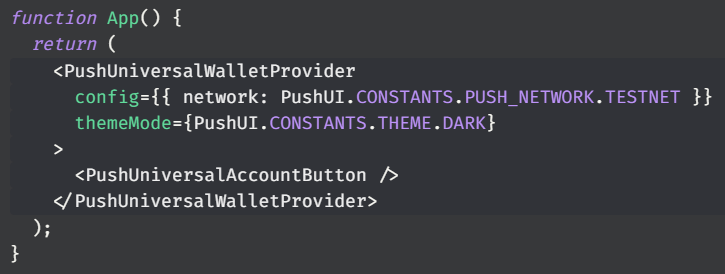
<p>Wrap your app with the Universal Wallet Provider:</p>
<p><img decoding="async" loading="lazy" alt="initialize the universal wallet provider" src="https://pushchain.github.io/push-chain-website/pr-preview/pr-1218/assets/images/image-2-e3d0ec78f975079de3878d380d4b1c9b.png" width="725" height="274" class="img_ev3q"></p>
<p>This activates the Universal Wallet layer. It handles:</p>
<p>• Authentication <br>
• Wallet provisioning <br>
• Secure key management <br>
• Session persistence <br>
• Wallet availability across your app <br></p>
<p>Your app now has an identity and wallet layer ready to onboard users.</p>
<h3 class="anchor anchorTargetHideOnScrollNavbar_vjPI" id="step-4-enable-additional-social-login-providers">Step 4: Enable additional social login providers<a href="https://pushchain.github.io/push-chain-website/pr-preview/pr-1218/blog/enable-social-logins-for-your-app/#step-4-enable-additional-social-login-providers" class="hash-link" aria-label="Direct link to Step 4: Enable additional social login providers" title="Direct link to Step 4: Enable additional social login providers" translate="no">​</a></h3>
<p>Push Wallet Kit also supports additional identity providers beyond Google and email.</p>
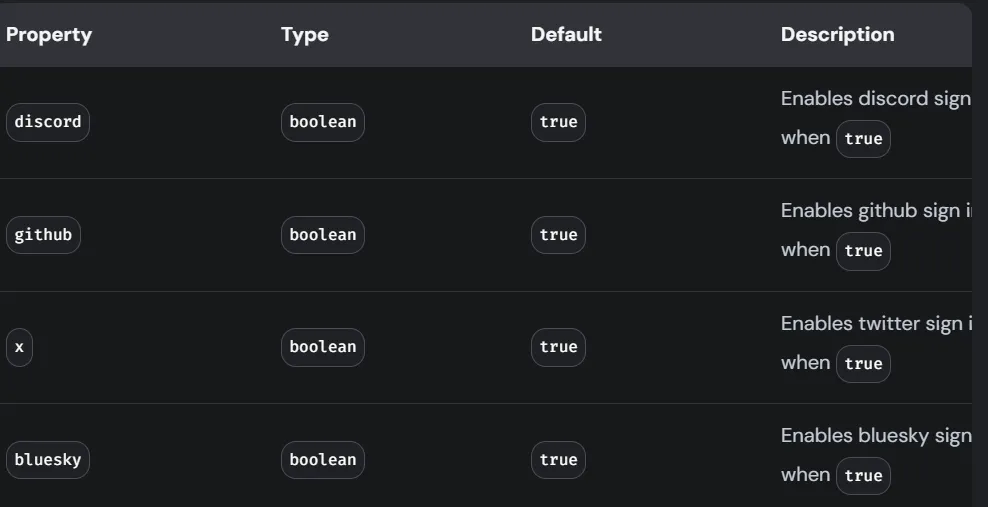
<p>You can enable providers listed below:</p>
<p><img decoding="async" loading="lazy" alt="social login providers" src="https://pushchain.github.io/push-chain-website/pr-preview/pr-1218/assets/images/image-3-9ab3e94e6106981714c25e92de7ce860.webp" width="988" height="507" class="img_ev3q"></p>
<p>Each authentication method provisions the same Universal Wallet identity.</p>
<p>This means users can log in using familiar platforms, while your app still interacts with a consistent wallet layer.</p>
<h3 class="anchor anchorTargetHideOnScrollNavbar_vjPI" id="what-universal-wallet-enables">What Universal Wallet enables<a href="https://pushchain.github.io/push-chain-website/pr-preview/pr-1218/blog/enable-social-logins-for-your-app/#what-universal-wallet-enables" class="hash-link" aria-label="Direct link to What Universal Wallet enables" title="Direct link to What Universal Wallet enables" translate="no">​</a></h3>
<p>Once authenticated, the user immediately has a usable wallet. This wallet:</p>
<p>• Persists across sessions <br>
• Can sign transactions <br>
• Can interact with smart contracts <br>
• Is accessible programmatically inside your app <br></p>
<p>No extensions/manual wallet setup required.</p>
<h3 class="anchor anchorTargetHideOnScrollNavbar_vjPI" id="what-you-unlock-as-a-builder">What you unlock as a builder<a href="https://pushchain.github.io/push-chain-website/pr-preview/pr-1218/blog/enable-social-logins-for-your-app/#what-you-unlock-as-a-builder" class="hash-link" aria-label="Direct link to What you unlock as a builder" title="Direct link to What you unlock as a builder" translate="no">​</a></h3>
<p>Users can log in and start using your app immediately.
They can sign transactions, interact with contracts, and participate onchain, without creating or connecting a wallet manually.</p>
<p>Universal Wallet ensures wallet identity exists from the first interaction.</p>
<h3 class="anchor anchorTargetHideOnScrollNavbar_vjPI" id="takeaway">Takeaway:<a href="https://pushchain.github.io/push-chain-website/pr-preview/pr-1218/blog/enable-social-logins-for-your-app/#takeaway" class="hash-link" aria-label="Direct link to Takeaway:" title="Direct link to Takeaway:" translate="no">​</a></h3>
<p>Push Wallet Kit unifies authentication and wallet provisioning into a single layer.</p>
<p>Authentication creates identity → Identity provisions the wallet → Wallet enables execution</p>
<p>Sounds game-changing, right? Explore <a href="https://push.org/docs/chain/ui-kit/customizations/push-universal-wallet-provider/" target="_blank" rel="noopener noreferrer" class="">here</a></p>]]></content>
        <author>
            <name>Push Chain</name>
            <uri>https://x.com/PushChain</uri>
        </author>
        <category label="Maker Monday" term="Maker Monday"/>
    </entry>
    <entry>
        <title type="html"><![CDATA[Season 3 Early Access is Live!]]></title>
        <id>https://pushchain.github.io/push-chain-website/pr-preview/pr-1218/blog/season-3-early-access-is-live/</id>
        <link href="https://pushchain.github.io/push-chain-website/pr-preview/pr-1218/blog/season-3-early-access-is-live/"/>
        <updated>2026-04-09T00:00:00.000Z</updated>
        <summary type="html"><![CDATA[“Early Access for the FINAL season of Push Points Program before mainnet is live!"]]></summary>
        <content type="html"><![CDATA[<p><img decoding="async" loading="lazy" alt="Cover Image of The Season 3 Early Access" src="https://pushchain.github.io/push-chain-website/pr-preview/pr-1218/assets/images/cover-image-74ed6151d4fa74c9d31f3a188bf65aac.webp" width="1600" height="900" class="img_ev3q"></p>
<p>Early Access for the <a href="https://portal.push.org/?utm_source=blog&amp;utm_medium=referral&amp;utm_campaign=s3earlyaccess" target="_blank" rel="noopener noreferrer" class="">FINAL season of Push Points Program</a> before mainnet is live!</p>
<p>The hunt for the golden rare pass begins.</p>
<div class="theme-admonition theme-admonition-info admonition_xJq3 alert alert--info"><div class="admonitionHeading_Gvgb"><span class="admonitionIcon_Rf37"><svg viewBox="0 0 14 16"><path fill-rule="evenodd" d="M7 2.3c3.14 0 5.7 2.56 5.7 5.7s-2.56 5.7-5.7 5.7A5.71 5.71 0 0 1 1.3 8c0-3.14 2.56-5.7 5.7-5.7zM7 1C3.14 1 0 4.14 0 8s3.14 7 7 7 7-3.14 7-7-3.14-7-7-7zm1 3H6v5h2V4zm0 6H6v2h2v-2z"></path></svg></span>Token not Live Yet</div><div class="admonitionContent_BuS1"><p>PC is the native token of Push Chain, token is not launched yet.</p></div></div>
<h2 class="anchor anchorTargetHideOnScrollNavbar_vjPI" id="what-is-points-program-s3-about">What is Points Program S3 about?<a href="https://pushchain.github.io/push-chain-website/pr-preview/pr-1218/blog/season-3-early-access-is-live/#what-is-points-program-s3-about" class="hash-link" aria-label="Direct link to What is Points Program S3 about?" title="Direct link to What is Points Program S3 about?" translate="no">​</a></h2>
<p>S3 is an incentivized testnet program created to reward honest users for exploring and experiencing the magic of Universal Apps on Push Chain.</p>
<p><strong>Use universal apps, earn points, collect rare passes, spin magic wheel, collect more rare passes, and top the leaderboard!</strong></p>
<p>Points earned will unlock your eligibility for the <strong>Push Chain reward drop</strong> during mainnet launch.</p>
<h2 class="anchor anchorTargetHideOnScrollNavbar_vjPI" id="what-are-the-rewards">What are the rewards?<a href="https://pushchain.github.io/push-chain-website/pr-preview/pr-1218/blog/season-3-early-access-is-live/#what-are-the-rewards" class="hash-link" aria-label="Direct link to What are the rewards?" title="Direct link to What are the rewards?" translate="no">​</a></h2>
<p>Rare Shiny Pass holders become eligible for many exciting rewards on mainnet day 1</p>
<ol>
<li class="">A unique mechanism with perpetual rewards for Shiny Pass holders</li>
<li class="">Boosted APY staking rewards</li>
<li class="">MORE BIGGER BANGERRR rewards will be revealed in the coming days!</li>
</ol>
<p>Note: S3 <a href="https://portal.push.org/rewards/leaderboard" target="_blank" rel="noopener noreferrer" class="">Leaderboard</a> rankers unlock additional boosted rewards</p>
<h2 class="anchor anchorTargetHideOnScrollNavbar_vjPI" id="what-are-rare-passes-what-do-they-unlock">What are Rare Passes? What do they unlock?<a href="https://pushchain.github.io/push-chain-website/pr-preview/pr-1218/blog/season-3-early-access-is-live/#what-are-rare-passes-what-do-they-unlock" class="hash-link" aria-label="Direct link to What are Rare Passes? What do they unlock?" title="Direct link to What are Rare Passes? What do they unlock?" translate="no">​</a></h2>
<p>Rare passes are unique collectables that have the potential to unlock greater rewards during TGE.</p>
<p><strong>Only a tiny % of rare passes will evolve into golden shiny passes</strong>, confirming your reward.</p>
<p>The more rare passes you collect. The higher your odds of winning a golden shiny pass.</p>
<h2 class="anchor anchorTargetHideOnScrollNavbar_vjPI" id="how-can-i-get-an-entry-into-the-early-access">How can I get an entry into the early access?<a href="https://pushchain.github.io/push-chain-website/pr-preview/pr-1218/blog/season-3-early-access-is-live/#how-can-i-get-an-entry-into-the-early-access" class="hash-link" aria-label="Direct link to How can I get an entry into the early access?" title="Direct link to How can I get an entry into the early access?" translate="no">​</a></h2>
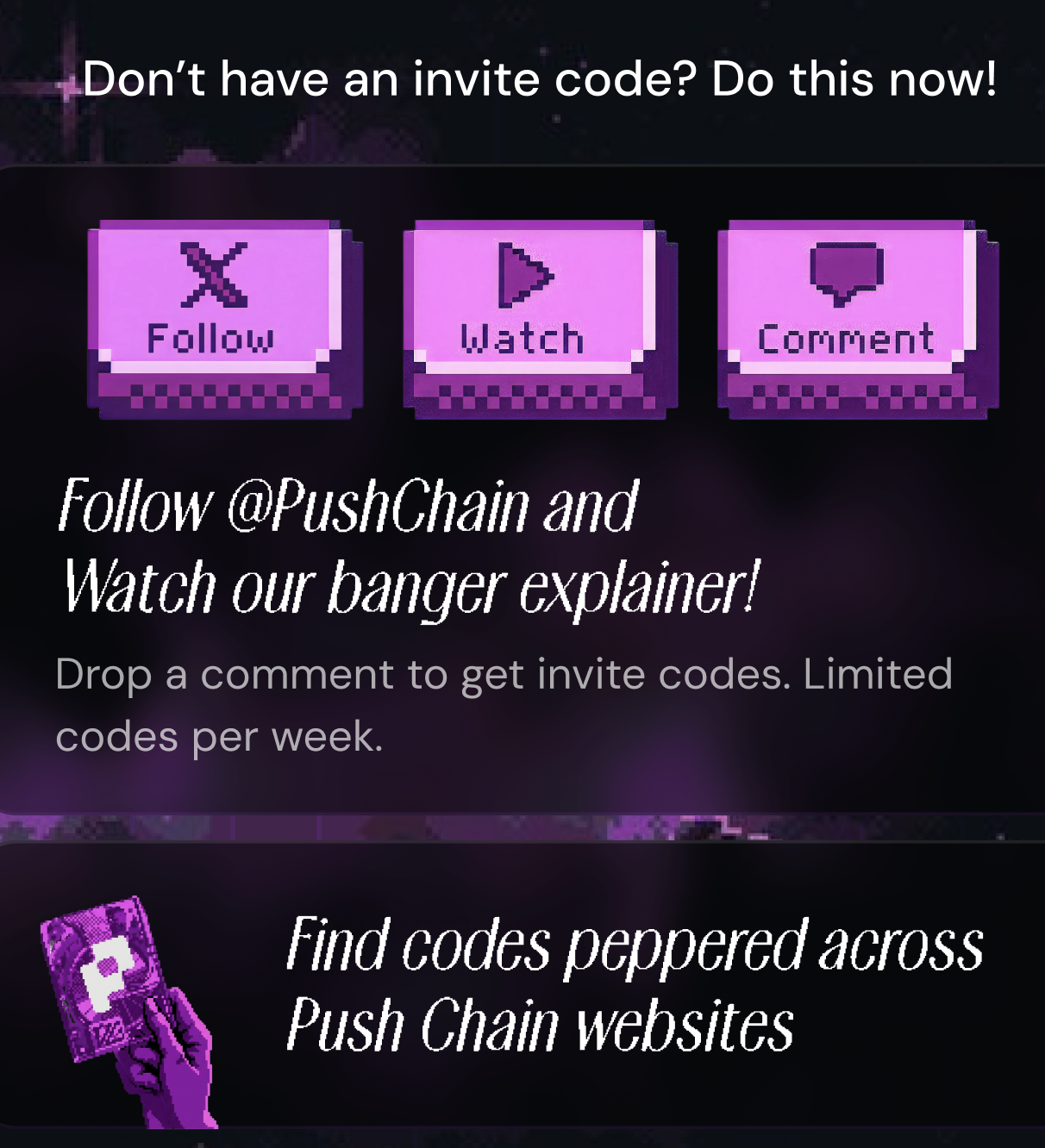
<p>Early Access is open to a limited number of users only.</p>
<p>You need an invite code in order to get in.</p>
<p>The best place to find invite codes is this:</p>
<p><img decoding="async" loading="lazy" alt="Get Invite code" src="https://pushchain.github.io/push-chain-website/pr-preview/pr-1218/assets/images/image-1-eec13ac12a60f4ac2a6a63b2aa25c9a9.webp" width="1212" height="1332" class="img_ev3q"></p>
<p>Remember! 1 invite = 1 user entry.
Once you’re in, you can invite up to 3 more frens</p>
<h2 class="anchor anchorTargetHideOnScrollNavbar_vjPI" id="how-can-i-make-the-most-out-of-this-program">How can I make the most out of this program?<a href="https://pushchain.github.io/push-chain-website/pr-preview/pr-1218/blog/season-3-early-access-is-live/#how-can-i-make-the-most-out-of-this-program" class="hash-link" aria-label="Direct link to How can I make the most out of this program?" title="Direct link to How can I make the most out of this program?" translate="no">​</a></h2>
<p>S3 is not just about play-to-earn. Look at the bigger scope here.</p>
<p>The apps you’ll be using are not normal crypto apps.</p>
<p>They are Universal in nature, meaning users across Solana and EVM, using wallets like MetaMask or Phantom, can interact with these apps without bridging.</p>
<p>Quick tips:</p>
<ul>
<li class="">Stay active on Discord and X for invite code giveaways.</li>
<li class="">Collect as many rare passes as you can!</li>
<li class="">Refer and onboard your frens and earn special multipliers</li>
<li class="">The more you level up, the better your chances of winning a rare pass.</li>
</ul>
<h2 class="anchor anchorTargetHideOnScrollNavbar_vjPI" id="how-does-push-chain-work">How does Push Chain work?<a href="https://pushchain.github.io/push-chain-website/pr-preview/pr-1218/blog/season-3-early-access-is-live/#how-does-push-chain-work" class="hash-link" aria-label="Direct link to How does Push Chain work?" title="Direct link to How does Push Chain work?" translate="no">​</a></h2>
<p>Push Chain is an L1. But not <em><strong>“yet another L1”</strong></em>. It is a shared state network designed to unite different chains together.</p>
<p>You can use apps that exist not just on Push but every popular chain including Solana, Ethereum, Base, BNB and more. Stronger volume, better yields, incredible fun.</p>
<p>No new wallet. No need to bridge funds. Sign in with Google or any of your existing wallets.</p>
<p>Builders can deploy apps on push and instantly support users from Solana, Base, BNB, any EVM chain!</p>
<h2 class="anchor anchorTargetHideOnScrollNavbar_vjPI" id="participation-guidelines">Participation Guidelines<a href="https://pushchain.github.io/push-chain-website/pr-preview/pr-1218/blog/season-3-early-access-is-live/#participation-guidelines" class="hash-link" aria-label="Direct link to Participation Guidelines" title="Direct link to Participation Guidelines" translate="no">​</a></h2>
<p>We’ve implemented sybil resistance checks to discourage botting and farming that doesn’t contribute meaningful value to users or the network.</p>
<p>Please use wallets with sufficient history and genuine activity.</p>
<p>Fair participation will be rewarded, while misuse may lead to restrictions.</p>
<p>If you have any questions, feel free to reach out to us on <a href="https://discord.com/invite/pushchain" target="_blank" rel="noopener noreferrer" class="">Discord</a></p>
<p>Join the program here - <strong><a href="https://portal.push.org/?utm_source=blog&amp;utm_medium=referral&amp;utm_campaign=s3earlyaccess" target="_blank" rel="noopener noreferrer" class="">portal.push.org</a></strong></p>]]></content>
        <author>
            <name>Push Chain</name>
            <uri>https://x.com/PushChain</uri>
        </author>
        <category label="Featured" term="Featured"/>
        <category label="Programs" term="Programs"/>
    </entry>
    <entry>
        <title type="html"><![CDATA[The Sexiest Architecture for Cross Chain DeFi Apps]]></title>
        <id>https://pushchain.github.io/push-chain-website/pr-preview/pr-1218/blog/architecture-for-cross-chain-defi-apps/</id>
        <link href="https://pushchain.github.io/push-chain-website/pr-preview/pr-1218/blog/architecture-for-cross-chain-defi-apps/"/>
        <updated>2026-04-07T00:00:00.000Z</updated>
        <summary type="html"><![CDATA[“If you’re building any cross-chain defi apps or want to upgrade your current app to cross-chain. This article’s for you."]]></summary>
        <content type="html"><![CDATA[<p><img decoding="async" loading="lazy" alt="Cover Image of The Sexiest Architecture for Cross Chain DeFi Apps" src="https://pushchain.github.io/push-chain-website/pr-preview/pr-1218/assets/images/cover-image-32e57a0d97f4aef1cf1c2193b856fba9.webp" width="1600" height="900" class="img_ev3q"></p>
<p>If you’re building any cross-chain defi apps or want to upgrade your current app to cross-chain. This article’s for you.</p>
<p>We like to explain things with examples...</p>
<p>So let's say you’re building a lending aggregator that can read and route user deposits to the best yield across <a href="https://aave.com/" target="_blank" rel="noopener noreferrer" class="">Aave</a> on Ethereum, <a href="https://compound.finance/" target="_blank" rel="noopener noreferrer" class="">Compound Finance</a> on Base, and <a href="https://app.marginfi.com/" target="_blank" rel="noopener noreferrer" class="">MarginFi</a> on Solana, or any other protocol on any chain.</p>
<p>Even though the idea sounds great and it would definitely attract an incredible amount of volume. But one honest fact that can't be ignored is how hectic it would be for devs to handle the cross-chain plumbing</p>
<h3 class="anchor anchorTargetHideOnScrollNavbar_vjPI" id="a-very-unsexy-problem">A very unsexy problem<a href="https://pushchain.github.io/push-chain-website/pr-preview/pr-1218/blog/architecture-for-cross-chain-defi-apps/#a-very-unsexy-problem" class="hash-link" aria-label="Direct link to A very unsexy problem" title="Direct link to A very unsexy problem" translate="no">​</a></h3>
<p>AAVE and most mature DeFi protocols let you specify who a deposit is for. There's a parameter called <strong>onBehalfOf</strong>, so the caller and the beneficiary don't have to be the same address.</p>
<p>Sounds like it solves the cross-chain problem, right?</p>
<p>Not quite. Because <strong>onBehalfOf</strong> just shifts the question, it doesn't answer it.
When a user from Solana, or any other chain, wants to deposit into AAVE on Ethereum: <strong>what address do you actually put there?</strong></p>
<p>The user has no persistent Ethereum address. So you end up passing the bridge or relayer contract as the beneficiary. Which means every user's AAVE position lives under the same address, same health factor, same borrowing limit, same liquidation risk across all of them!!</p>
<p>And for borrowing, it gets worse. AAVE's <strong>onBehalfOf</strong> for borrows requires something called credit delegation. The beneficiary address has to have pre-approved the caller on Ethereum, before any borrowing can happen. A user with no Ethereum history can't do that.</p>
<p>So the real problem isn't <strong>msg.sender</strong>.  It's that cross-chain users have no persistent, protocol-recognised address on the destination chain to begin with.</p>
<p><strong>No consistent address = no isolated position = no real aggregator.</strong></p>
<p>This is the identity problem in cross-chain DeFi. And it's what most interop protocols have actually failed to efficiently solve.</p>
<p>The destination chain has no way to distinguish users because EVM only sees who called it last and not the original initiator. Solutions like per-user proxy contracts on the destination chain or smart account patterns (which is essentially what Push Chain's UEA and CEA model does) exist, but they require the dApp to architect around this. And most cross-chain interop layers don't handle it natively.</p>
<p>Digs aside.
Let’s actually acknowledge it and figure out a viable UNIVERSAL solution.</p>
<h3 class="anchor anchorTargetHideOnScrollNavbar_vjPI" id="3-non-negotiable-rules">3 non-negotiable rules<a href="https://pushchain.github.io/push-chain-website/pr-preview/pr-1218/blog/architecture-for-cross-chain-defi-apps/#3-non-negotiable-rules" class="hash-link" aria-label="Direct link to 3 non-negotiable rules" title="Direct link to 3 non-negotiable rules" translate="no">​</a></h3>
<p>For a lending aggregator to work correctly across chains, 3 things must hold:</p>
<ol>
<li class="">Each user must have an isolated, persistent identity on every target chain.</li>
<li class="">That identity must be deterministically derivable.</li>
<li class="">And most imp: The user must be able to act from anywhere. Their home chain, a different L1, L2, doesn’t matter!</li>
</ol>
<p>Most current approaches solve (3) at the cost of (1).
You do get semi-efficient cross-chain execution, but at the cost of identity collapse and extreme development overhead.</p>
<h3 class="anchor anchorTargetHideOnScrollNavbar_vjPI" id="the-architecture-that-actually-works">The architecture that actually works<a href="https://pushchain.github.io/push-chain-website/pr-preview/pr-1218/blog/architecture-for-cross-chain-defi-apps/#the-architecture-that-actually-works" class="hash-link" aria-label="Direct link to The architecture that actually works" title="Direct link to The architecture that actually works" translate="no">​</a></h3>
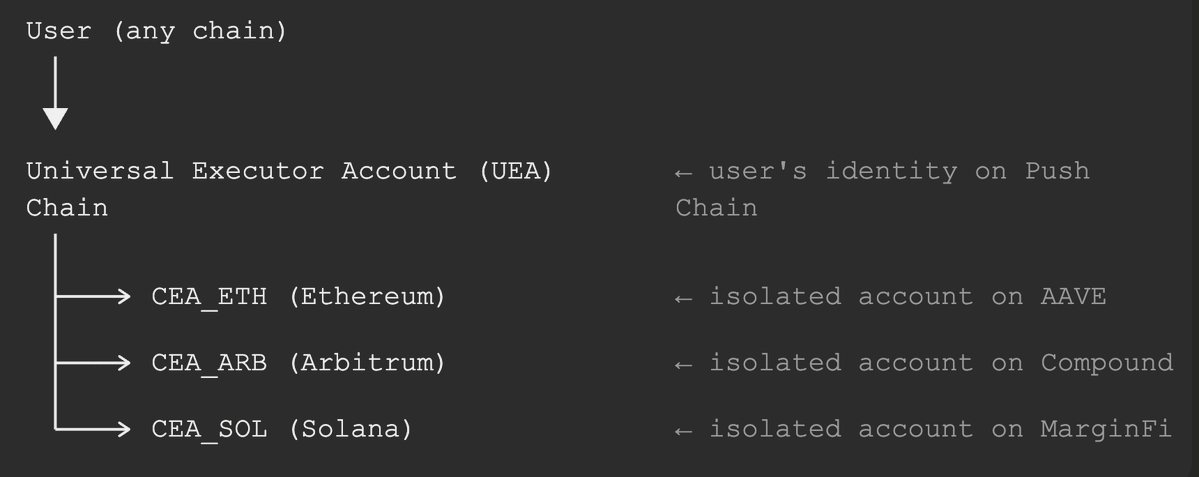
<p>The pattern that solves this mess cleanly is called <strong>CEA - Chain Execution Account</strong>: A smart contract deployed on each target chain, deterministically derived from the user’s identity on the coordination layer (i.e Push Chain)</p>
<p>Each CEA is derived from the parent UEA plus the target chain ID.</p>
<p><img decoding="async" loading="lazy" alt="Unified Account Across Chains" src="https://pushchain.github.io/push-chain-website/pr-preview/pr-1218/assets/images/image-1-0621ab2859dbc5f66411a5c2d97e91aa.webp" width="1199" height="477" class="img_ev3q"></p>
<p>Same user, different chains - but always the same deterministic address.</p>
<p>If you’re new to the concept of UEA would recommend checking this quick guide on UEAs first. <strong><a href="https://push.org/blog/what-are-universal-executor-accounts/" target="_blank" rel="noopener noreferrer" class="">What are UEAs?</a></strong></p>
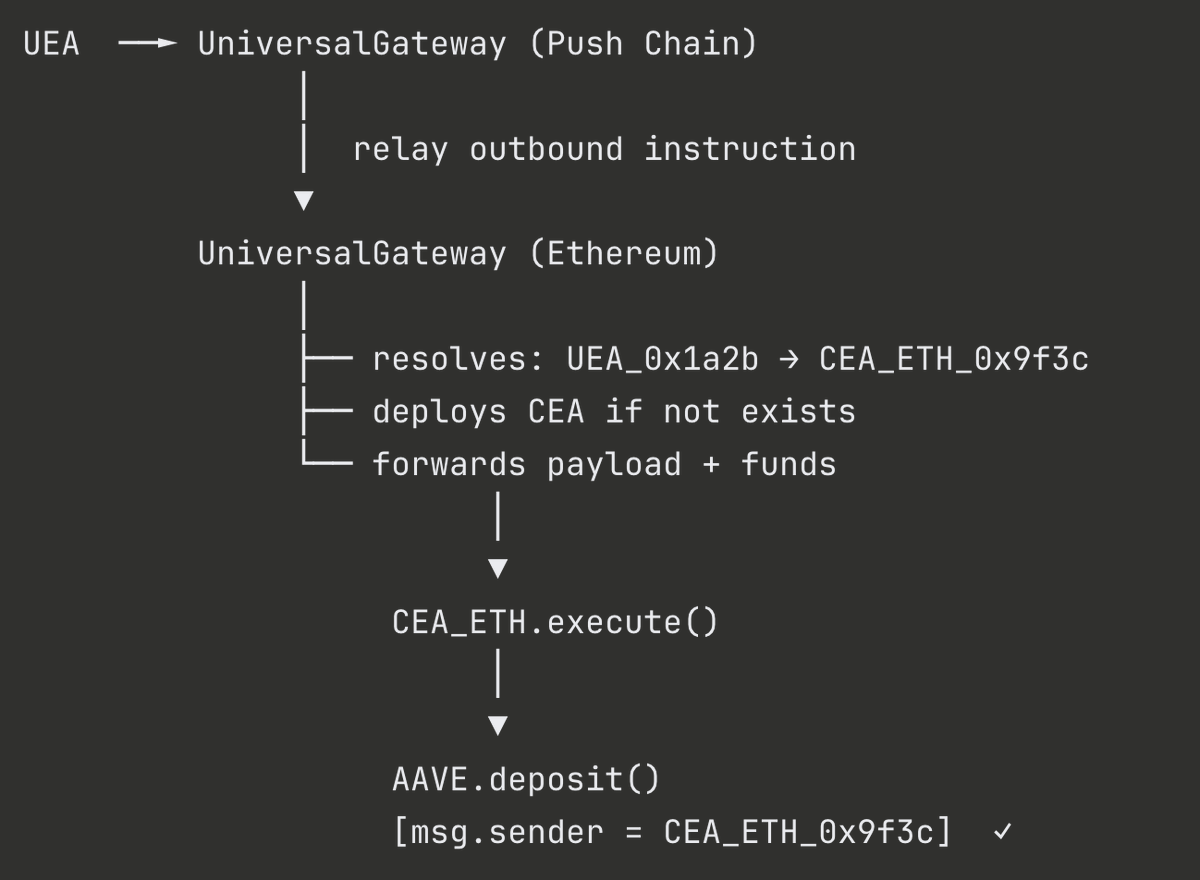
<p>The flow for a deposit looks like this:</p>
<p><img decoding="async" loading="lazy" alt="Deposit Flow" src="https://pushchain.github.io/push-chain-website/pr-preview/pr-1218/assets/images/image-2-73d68dbf049f3e989076e60a960567d7.webp" width="1200" height="880" class="img_ev3q"></p>
<p>Now AAVE sees a consistent, user-specific address every single time. The health factor is isolated. Borrow limits are per-user. Liquidations behave correctly.</p>
<h3 class="anchor anchorTargetHideOnScrollNavbar_vjPI" id="what-this-unlocks-for-aggregator-design">What This Unlocks for Aggregator Design<a href="https://pushchain.github.io/push-chain-website/pr-preview/pr-1218/blog/architecture-for-cross-chain-defi-apps/#what-this-unlocks-for-aggregator-design" class="hash-link" aria-label="Direct link to What This Unlocks for Aggregator Design" title="Direct link to What This Unlocks for Aggregator Design" translate="no">​</a></h3>
<p>With per-user CEAs in place, the aggregator contract on Push Chain can do things that were structurally impossible before.</p>
<p><strong>Cross-chain collateral loops become straightforward:</strong>
Deposit ETH on AAVE via CEA_ETH, borrow USDC against it, route the USDC back to the UEA, redeploy it on Base via CEA_BASE. Each hop preserves identity. No position bleed between users.</p>
<p><strong>Unified health factor monitoring is now coherent:</strong>
Because each CEA maps 1:1 with a UEA, a smart contract on Push Chain can track CEA_ETH → AAVE position and CEA_ARB → Compound position for the same user and act on either.</p>
<p>A natural extension to this feature would also be:
<strong>Automated liquidation protection:</strong> trigger a repayment to CEA_ETH when health drops below threshold</p>
<p><strong>Withdrawals</strong> route CEA → UEA via a funds transfer route, so capital can be swept back to the coordination layer and redeployed elsewhere without needing additional account infrastructure.</p>
<h3 class="anchor anchorTargetHideOnScrollNavbar_vjPI" id="the-part-worth-sitting-with">The Part worth sitting with<a href="https://pushchain.github.io/push-chain-website/pr-preview/pr-1218/blog/architecture-for-cross-chain-defi-apps/#the-part-worth-sitting-with" class="hash-link" aria-label="Direct link to The Part worth sitting with" title="Direct link to The Part worth sitting with" translate="no">​</a></h3>
<p>Bridges solve asset movement. Relayers solve message passing. But neither solves the question of who is acting on the destination chain. CEAs answer that question cleanly, and once that's answered, the rest of the aggregator design becomes significantly less complicated.</p>
<p>If you're building cross-chain DeFi infrastructure, this is the piece to get right first.</p>
<p>Want to find out more cool things about Push Chain?</p>
<p>Check out our <a href="https://push.org/knowledge/" target="_blank" rel="noopener noreferrer" class="">knowledge base</a></p>
<p>And experience the power of <a href="https://push.org/ecosystem/" target="_blank" rel="noopener noreferrer" class="">UNIVERSAL APPS</a> here.</p>]]></content>
        <author>
            <name>Push Chain</name>
            <uri>https://x.com/PushChain</uri>
        </author>
        <category label="Maker Monday" term="Maker Monday"/>
        <category label="Key Features" term="Key Features"/>
    </entry>
    <entry>
        <title type="html"><![CDATA[Rethinking Wallet Security Beyond Bridges]]></title>
        <id>https://pushchain.github.io/push-chain-website/pr-preview/pr-1218/blog/rethinking-wallet-security/</id>
        <link href="https://pushchain.github.io/push-chain-website/pr-preview/pr-1218/blog/rethinking-wallet-security/"/>
        <updated>2026-03-30T00:00:00.000Z</updated>
        <summary type="html"><![CDATA[“Most people think wallet security is about private keys. Yet, most exploits happen when assets move between chains."]]></summary>
        <content type="html"><![CDATA[<p><img decoding="async" loading="lazy" alt="Cover Image of Rethinking Wallet Security Beyond Bridges" src="https://pushchain.github.io/push-chain-website/pr-preview/pr-1218/assets/images/cover-image-27f4a4782a380008e928ba91a296a3f3.webp" width="1600" height="900" class="img_ev3q"></p>
<p>Most people think wallet security is about private keys.<br>
<!-- -->Yet, most exploits happen when assets move between chains.</p>
<p>This Maker Monday explains how Push Chain handles asset movement across chains without bridges, and why that changes the security model completely. Let’s dive in!</p>
<p><strong>Usual problem with bridges</strong></p>
<p>Here’s how a bridge works &amp; where it exploits the assets:</p>
<p>1️⃣ you lock assets on chain A<br>
<!-- -->2️⃣ a small set of signers controls a pool<br>
<!-- -->3️⃣ a wrapped version appears on chain B</p>
<p>If that signer set is compromised, the wrapped assets become useless.
That’s not a UX issue,  that’s a design issue.</p>
<p>Push doesn’t aim to fix the bridge’s security.
We avoid needing them in the first place.</p>
<p>If asset movement depends on a small signer set, security will always be fragile.</p>
<h3 class="anchor anchorTargetHideOnScrollNavbar_vjPI" id="wallet-security-is-really-who-can-approve-a-transfer">Wallet security is really “who can approve a transfer.”<a href="https://pushchain.github.io/push-chain-website/pr-preview/pr-1218/blog/rethinking-wallet-security/#wallet-security-is-really-who-can-approve-a-transfer" class="hash-link" aria-label="Direct link to Wallet security is really “who can approve a transfer.”" title="Direct link to Wallet security is really “who can approve a transfer.”" translate="no">​</a></h3>
<p>On Push, assets are controlled using MPC (Multi-Party Computation), built with Silence Labs. Read more about the integration <a href="https://push.org/blog/push-chain-silence-labs/" target="_blank" rel="noopener noreferrer" class="">here</a>.</p>
<p>Here’s the simplest way to think about it:</p>
<ul>
<li class="">There is no single private key</li>
<li class="">The “key” is split across multiple validators</li>
<li class="">No validator can move funds alone</li>
<li class="">A minimum number of signers must agree every time</li>
</ul>
<p>Nothing gets signed unless the network agrees.<br>
<!-- -->This isn’t about hiding keys better.
It’s about removing unilateral control.</p>
<p>Even if one validator is hacked, nothing moves.</p>
<h3 class="anchor anchorTargetHideOnScrollNavbar_vjPI" id="what-universal-assets-actually-mean">What “Universal Assets” actually mean<a href="https://pushchain.github.io/push-chain-website/pr-preview/pr-1218/blog/rethinking-wallet-security/#what-universal-assets-actually-mean" class="hash-link" aria-label="Direct link to What “Universal Assets” actually mean" title="Direct link to What “Universal Assets” actually mean" translate="no">​</a></h3>
<p>Universal Assets let you use assets from other chains directly on Push.</p>
<p>Examples:<br>
<!-- -->ETH → pETH<br>
<!-- -->SOL → pSOL<br>
<!-- -->USDC → pUSDC</p>
<p>These are <strong>not wrapped tokens</strong>.</p>
<ul>
<li class="">10 ETH locked → 10 pETH minted</li>
<li class="">10 pETH burned → 10 ETH released</li>
</ul>
<p>Same amount. Same value. Always 1:1.</p>
<p>No pools.<br>
<!-- -->No peg maintenance.<br>
<!-- -->No oracle tricks.</p>
<p>There’s no scenario where users hold an unbacked asset.</p>
<h3 class="anchor anchorTargetHideOnScrollNavbar_vjPI" id="how-assets-are-moved-into-push">How assets are moved into Push:<a href="https://pushchain.github.io/push-chain-website/pr-preview/pr-1218/blog/rethinking-wallet-security/#how-assets-are-moved-into-push" class="hash-link" aria-label="Direct link to How assets are moved into Push:" title="Direct link to How assets are moved into Push:" translate="no">​</a></h3>
<p>Let’s say you’re a Solana user with SOL!</p>
<p>Here’s what actually happens:</p>
<ol>
<li class="">
<p>You sign once on Solana</p>
</li>
<li class="">
<p>Your SOL is locked via a Universal Gateway</p>
</li>
<li class="">
<p>Funds move into an MPC-controlled vault</p>
</li>
<li class="">
<p>Validators verify:</p>
<p>→ Transaction happened<br>
<!-- -->→ Amount is correct<br>
<!-- -->→ Funds are secured</p>
</li>
<li class="">
<p>Push mints the same amount of pSOL to your account</p>
</li>
</ol>
<p>That’s it.<br>
<!-- -->No second transaction.<br>
<!-- -->No bridge UI.</p>
<p>No extra claiming step.<br>
<!-- -->Assets are secured before they’re usable.</p>
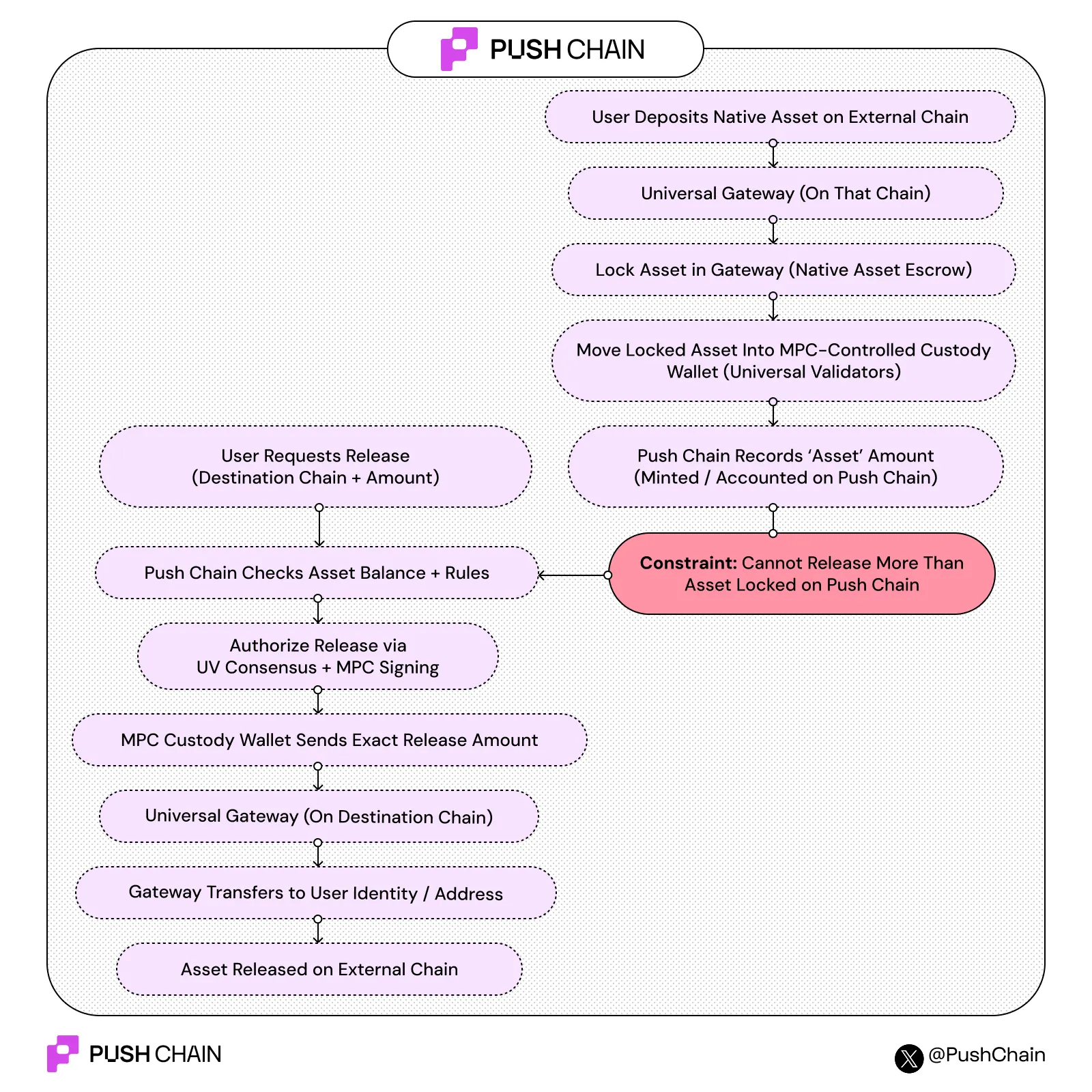
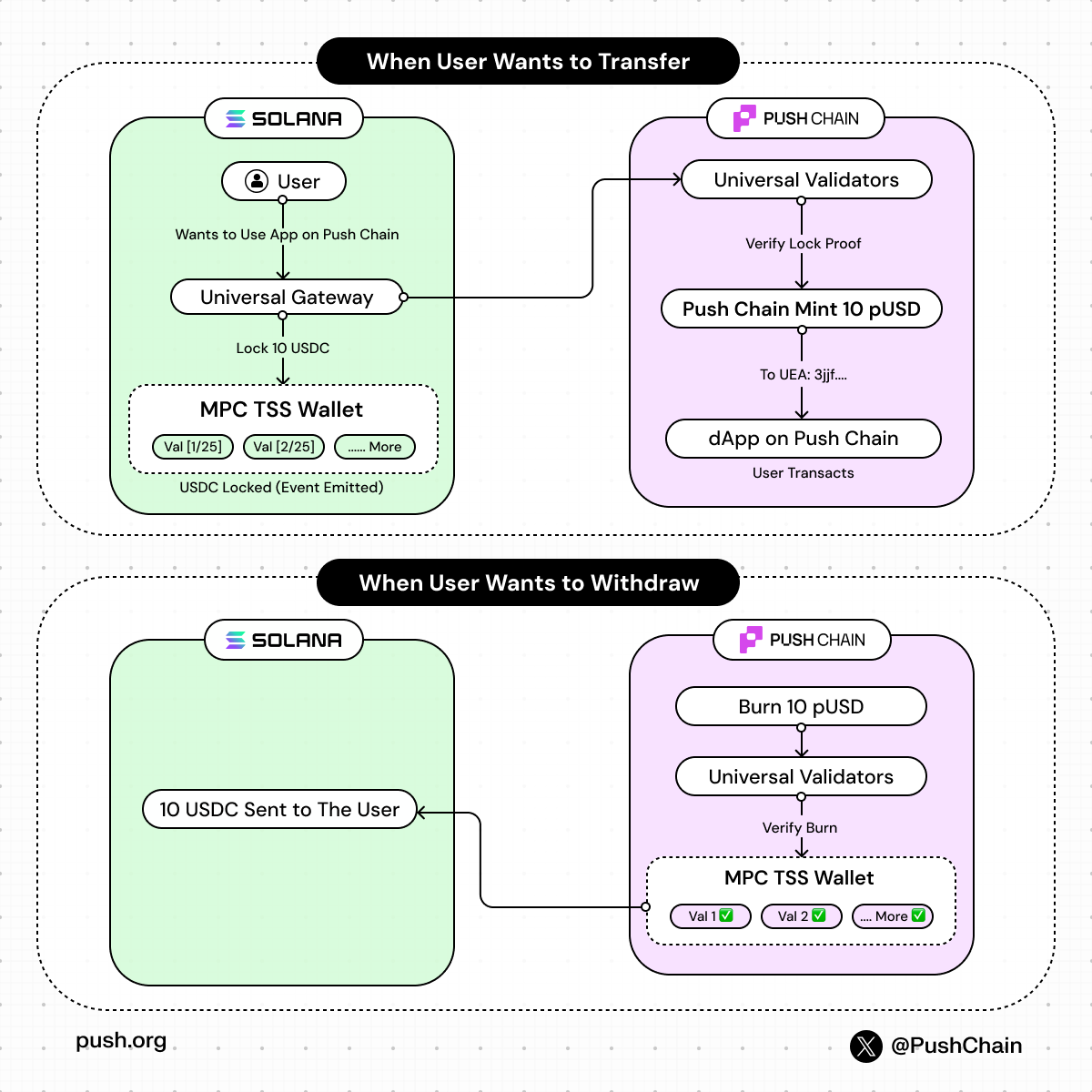
<p>Here is a flow diagram showing how a native asset moves from an external chain to the Push Chain and back, without bridges, wrapped tokens, or trusted relayers.</p>
<p><img decoding="async" loading="lazy" alt="Asset Movement Flow Diagram" src="https://pushchain.github.io/push-chain-website/pr-preview/pr-1218/assets/images/image-1-412a5b68bdcb796ed7efde7086e8938e.webp" width="1600" height="1600" class="img_ev3q"></p>
<h3 class="anchor anchorTargetHideOnScrollNavbar_vjPI" id="how-assets-leave-push-chain">How assets leave Push Chain:<a href="https://pushchain.github.io/push-chain-website/pr-preview/pr-1218/blog/rethinking-wallet-security/#how-assets-leave-push-chain" class="hash-link" aria-label="Direct link to How assets leave Push Chain:" title="Direct link to How assets leave Push Chain:" translate="no">​</a></h3>
<p>Leaving Push is the reverse, and this is where security really shows.</p>
<ol>
<li class="">You burn pSOL on Push</li>
<li class="">A burn proof is emitted</li>
<li class="">Validators independently verify it</li>
<li class="">A threshold of validators co-sign a release</li>
<li class="">Your original SOL is sent back to Solana</li>
</ol>
<p>Key details:</p>
<ul>
<li class="">Validators never “send” funds directly</li>
<li class="">They only produce partial signatures</li>
<li class="">The MPC vault releases exactly what was burned</li>
</ul>
<p>You can’t release more than you burned.<br>
<!-- -->The math won’t allow it.</p>
<p>There’s no bridge pool to drain ever.</p>
<p>Threshold signing doesn’t run inside the validator itself.</p>
<ul>
<li class="">Validators handle consensus and verification</li>
<li class="">A separate MPC signer (sidecar) handles cryptography</li>
<li class="">Even if validator logic fails, keys remain protected</li>
</ul>
<p>This separation limits the blast radius.<br>
<!-- -->Breaking consensus logic doesn’t give you access to funds.</p>
<h3 class="anchor anchorTargetHideOnScrollNavbar_vjPI" id="how-does-this-change-failure-modes">How does this change failure modes?<a href="https://pushchain.github.io/push-chain-website/pr-preview/pr-1218/blog/rethinking-wallet-security/#how-does-this-change-failure-modes" class="hash-link" aria-label="Direct link to How does this change failure modes?" title="Direct link to How does this change failure modes?" translate="no">​</a></h3>
<p>Here’s the real difference compared to bridges:<br>
<!-- -->If a bridge breaks → wrapped assets break<br>
<!-- -->If Push halts → assets stay locked safely</p>
<p>Burn proofs still exist. Funds don’t disappear.
They just wait.</p>
<p><strong>Takeaway:</strong><br>
<!-- -->Most systems assume bridges are unavoidable.<br>
<!-- -->Push assumes asset movement itself must be constrained.</p>
<p>That’s the shift:</p>
<ul>
<li class="">from trusting signers</li>
<li class="">to enforce rules at the protocol level</li>
</ul>
<p>Wallet security isn’t about better warnings.<br>
<!-- -->It’s about making bad outcomes impossible.</p>]]></content>
        <author>
            <name>Push Chain</name>
            <uri>https://x.com/PushChain</uri>
        </author>
        <category label="Maker Monday" term="Maker Monday"/>
    </entry>
    <entry>
        <title type="html"><![CDATA[How Push Chain Centralizes Rules Without Centralizing Risk]]></title>
        <id>https://pushchain.github.io/push-chain-website/pr-preview/pr-1218/blog/how-push-chain-centralizes-rules-without-centralizing-risk/</id>
        <link href="https://pushchain.github.io/push-chain-website/pr-preview/pr-1218/blog/how-push-chain-centralizes-rules-without-centralizing-risk/"/>
        <updated>2026-03-26T00:00:00.000Z</updated>
        <summary type="html"><![CDATA[“Push Chain unifies what counts as a valid action, how state progresses, and what the final outcome is without unifying where actions originate."]]></summary>
        <content type="html"><![CDATA[<p><img decoding="async" loading="lazy" alt="Cover Image of How Push Chain Centralizes Rules Without Centralizing Risk" src="https://pushchain.github.io/push-chain-website/pr-preview/pr-1218/assets/images/cover-image-a46cdf1230552cffd1881b5bc9bc804a.webp" width="1600" height="900" class="img_ev3q"></p>
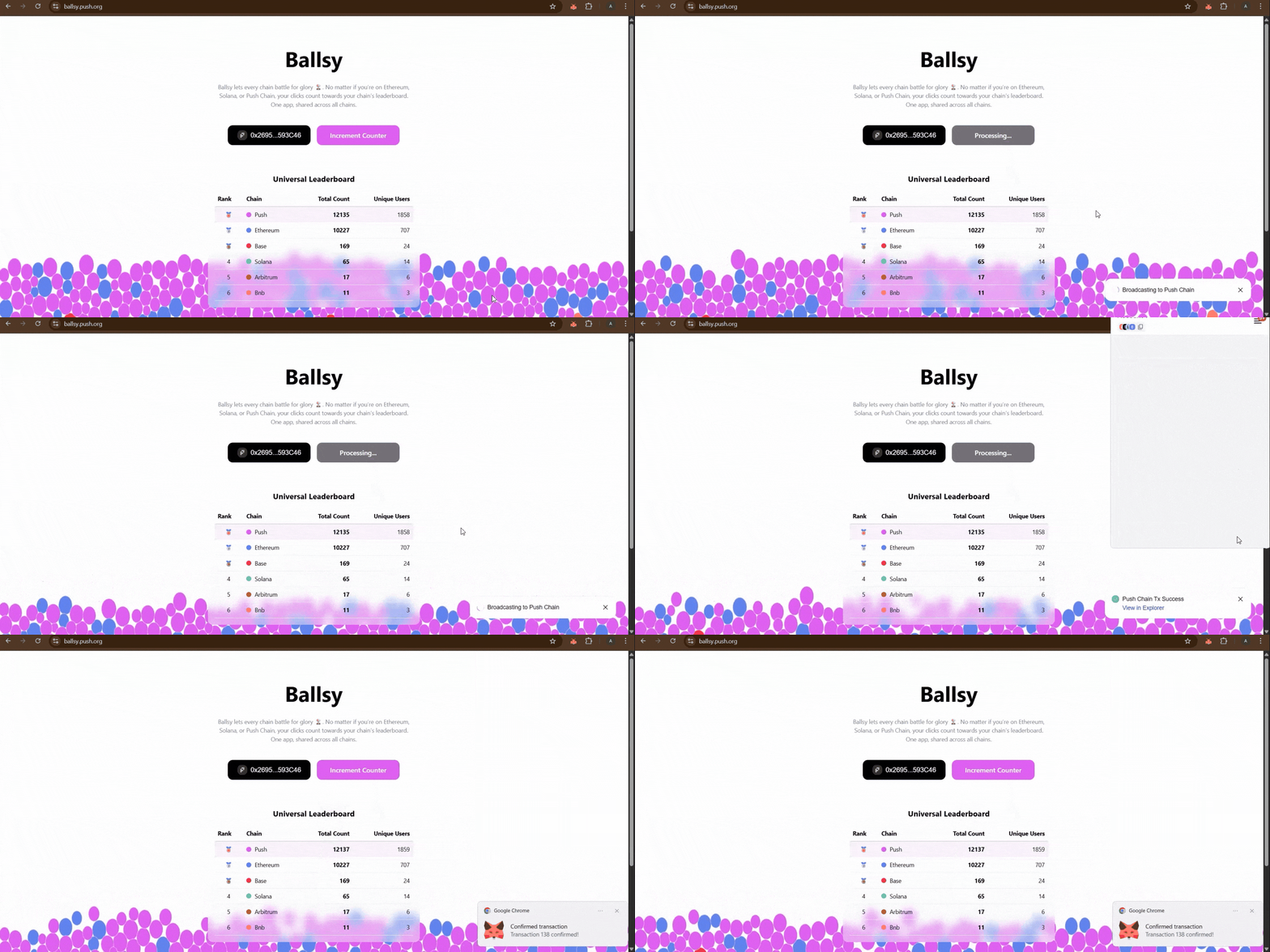
<h3 class="anchor anchorTargetHideOnScrollNavbar_vjPI" id="ballsy-looks-singular-on-paper">Ballsy looks singular on paper.<a href="https://pushchain.github.io/push-chain-website/pr-preview/pr-1218/blog/how-push-chain-centralizes-rules-without-centralizing-risk/#ballsy-looks-singular-on-paper" class="hash-link" aria-label="Direct link to Ballsy looks singular on paper." title="Direct link to Ballsy looks singular on paper." translate="no">​</a></h3>
<p>It’s one game with one rule set, producing a canonical outcome, and by web3 instinct, that immediately feels risky.</p>
<p>But that instinct confuses shared rules with shared control. You can have a shared state without giving up decentralized execution.</p>
<p>Ballsy is simple. But what it requires isn’t.
Ballsy is a cross-chain game where every player, no matter which chain they’re on, interacts with the same game state and gets the same outcome.</p>
<p>One game with one set of rules, and with one shared truth.</p>
<p><strong>Here’s how most teams would approach building something like Ballsy today:</strong></p>
<ul>
<li class="">Deploy the game separately on each chain</li>
<li class="">Each deployment tracks its own state</li>
<li class="">Outcomes are synced after the fact</li>
</ul>
<p>There’s no shared state and no obvious center, which makes it feel decentralized, but in reality, it isn’t state-authoritative.</p>
<p>And this design doesn’t fail loudly; it fails quietly.
Rules start updating at different times, edge cases get handled inconsistently, and over time, state transitions stop lining up.</p>
<p>Each instance appears “correct,” but collectively, they drift apart. This is where the real issue begins.</p>
<p>You don’t actually have decentralization, what you have is duplicated authority over state across multiple consensus domains.</p>
<p>Push Chain solves this by removing duplication, not control.</p>
<p>Ballsy runs on:</p>
<ul>
<li class="">A single authoritative game state</li>
<li class="">One source of truth for outcomes</li>
<li class="">One consensus-enforced rule set</li>
</ul>
<p>So execution remains decentralized.</p>
<p>Ballsy runs with a single authoritative game state, a single source of truth for outcomes, and one consensus-enforced rule set.</p>
<p>The distinction most systems miss is simple, but critical:
<strong>State authority is not the same as execution authority.</strong></p>
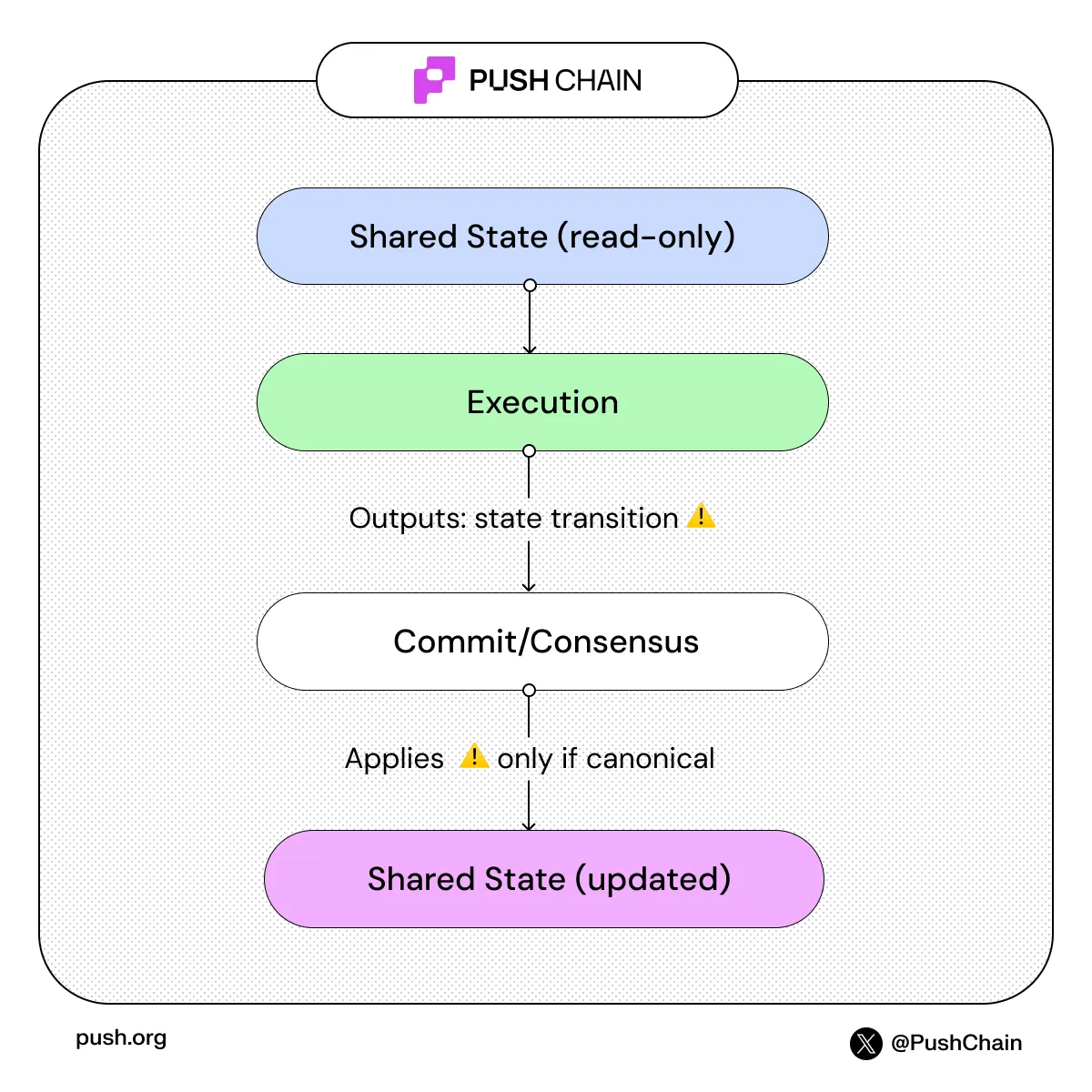
<p>Push Chain unifies what counts as a valid action, how state progresses, and what the final outcome is without unifying where actions originate, who submits transactions, or how users retain sovereignty.</p>
<p>And when state authority is unified, a lot of unnecessary complexity simply disappears.</p>
<p>There’s no need for syncing logic, no reconciliation layer, and no debates over which deployment is “correct.”</p>
<p>Not because the complexity moved somewhere else but because it was never necessary to begin with.</p>
<p>Ballsy depends on this model.
Without a single authoritative state, cross-chain determinism breaks, and outcomes eventually diverge.</p>
<p><img decoding="async" loading="lazy" alt="Demo of Ballsy App" src="https://pushchain.github.io/push-chain-website/pr-preview/pr-1218/assets/images/demoofballsyapp-6ebd84e98e071e5b131c7b987dae3078.gif" width="1534" height="768" class="img_ev3q"></p>
<p>If your app has multiple places that decide state truth, you don’t have resilience.
You have ambiguity.</p>
<p>Push Chain doesn’t centralize apps.</p>
<p>It unifies state authority under a single consensus domain, so execution can remain decentralized.</p>
<p>One source of truth, with many execution environments.</p>
<p>Don’t just read, experience it!
Interact with different chains and observe how the outcome remains consistent. <br>
👉 <a href="https://ballsy.push.org/" target="_blank" rel="noopener noreferrer" class="">https://ballsy.push.org/</a></p>]]></content>
        <author>
            <name>Push Chain</name>
            <uri>https://x.com/PushChain</uri>
        </author>
        <category label="Deep Dives" term="Deep Dives"/>
    </entry>
    <entry>
        <title type="html"><![CDATA[Why execution doesn’t decide global state on Push Chain]]></title>
        <id>https://pushchain.github.io/push-chain-website/pr-preview/pr-1218/blog/why-execution-doesn't-decide-global-state/</id>
        <link href="https://pushchain.github.io/push-chain-website/pr-preview/pr-1218/blog/why-execution-doesn't-decide-global-state/"/>
        <updated>2026-03-23T00:00:00.000Z</updated>
        <summary type="html"><![CDATA[“Shared State” sounds risky, and that instinct is correct. If execution happens across chains, what stops?"]]></summary>
        <content type="html"><![CDATA[<p><img decoding="async" loading="lazy" alt="Cover Image of Why execution doesn’t decide global state on Push Chain" src="https://pushchain.github.io/push-chain-website/pr-preview/pr-1218/assets/images/cover-image-8ba74721a91393b61418f1eab898797b.webp" width="1600" height="900" class="img_ev3q"></p>
<p>“Shared State” sounds risky, and that instinct is correct.</p>
<p>If execution happens across chains, what stops?</p>
<p>→ partial updates <br>
→ reorg bleed-through <br>
→ inconsistent global state <br></p>
<h2 class="anchor anchorTargetHideOnScrollNavbar_vjPI" id="not-all-chains-finalize-blocks-the-same-way">Not all chains finalize blocks the same way<a href="https://pushchain.github.io/push-chain-website/pr-preview/pr-1218/blog/why-execution-doesn't-decide-global-state/#not-all-chains-finalize-blocks-the-same-way" class="hash-link" aria-label="Direct link to Not all chains finalize blocks the same way" title="Direct link to Not all chains finalize blocks the same way" translate="no">​</a></h2>
<p>Different chains provide different levels of finality:</p>
<h3 class="anchor anchorTargetHideOnScrollNavbar_vjPI" id="deterministic-style-finality">Deterministic style finality<a href="https://pushchain.github.io/push-chain-website/pr-preview/pr-1218/blog/why-execution-doesn't-decide-global-state/#deterministic-style-finality" class="hash-link" aria-label="Direct link to Deterministic style finality" title="Direct link to Deterministic style finality" translate="no">​</a></h3>
<ul>
<li class="">Once committed, blocks are effectively irreversible</li>
<li class="">Confirmation is certain</li>
<li class="">Reorg risk is negligible</li>
</ul>
<h3 class="anchor anchorTargetHideOnScrollNavbar_vjPI" id="probabilistic-finality">Probabilistic finality<a href="https://pushchain.github.io/push-chain-website/pr-preview/pr-1218/blog/why-execution-doesn't-decide-global-state/#probabilistic-finality" class="hash-link" aria-label="Direct link to Probabilistic finality" title="Direct link to Probabilistic finality" translate="no">​</a></h3>
<ul>
<li class="">Blocks can be reorganized within a window</li>
<li class="">Early confirmations are not absolute</li>
<li class="">Finality strengthens over time</li>
</ul>
<p>This difference is where most cross-chain complexity begins.</p>
<h2 class="anchor anchorTargetHideOnScrollNavbar_vjPI" id="how-push-chain-separates-execution-from-state">How Push Chain separates execution from state<a href="https://pushchain.github.io/push-chain-website/pr-preview/pr-1218/blog/why-execution-doesn't-decide-global-state/#how-push-chain-separates-execution-from-state" class="hash-link" aria-label="Direct link to How Push Chain separates execution from state" title="Direct link to How Push Chain separates execution from state" translate="no">​</a></h2>
<p>Push Chain enforces a strict rule:</p>
<h4 class="anchor anchorTargetHideOnScrollNavbar_vjPI" id="execution-cannot-directly-mutate-shared-state">Execution cannot directly mutate Shared State.<a href="https://pushchain.github.io/push-chain-website/pr-preview/pr-1218/blog/why-execution-doesn't-decide-global-state/#execution-cannot-directly-mutate-shared-state" class="hash-link" aria-label="Direct link to Execution cannot directly mutate Shared State." title="Direct link to Execution cannot directly mutate Shared State." translate="no">​</a></h4>
<p>Execution can:</p>
<ul>
<li class="">read shared state</li>
<li class="">run logic</li>
<li class="">compute outcomes</li>
</ul>
<p>But it cannot commit state changes directly.
Only canonical block commits can update Shared State.</p>
<h2 class="anchor anchorTargetHideOnScrollNavbar_vjPI" id="the-mental-model">The mental model<a href="https://pushchain.github.io/push-chain-website/pr-preview/pr-1218/blog/why-execution-doesn't-decide-global-state/#the-mental-model" class="hash-link" aria-label="Direct link to The mental model" title="Direct link to The mental model" translate="no">​</a></h2>
<p>Think of execution as a sandboxed simulation:</p>
<ul>
<li class="">Transactions propose changes</li>
<li class="">Execution computes the result</li>
<li class="">But nothing is applied yet</li>
</ul>
<p>Only when a block becomes canonical:</p>
<ul>
<li class="">Results are committed</li>
<li class="">Shared State is updated</li>
</ul>
<p>If a block is dropped or reorganized:</p>
<h4 class="anchor anchorTargetHideOnScrollNavbar_vjPI" id="its-effects-never-enter-the-canonical-shared-state">its effects never enter the canonical Shared State<a href="https://pushchain.github.io/push-chain-website/pr-preview/pr-1218/blog/why-execution-doesn't-decide-global-state/#its-effects-never-enter-the-canonical-shared-state" class="hash-link" aria-label="Direct link to its effects never enter the canonical Shared State" title="Direct link to its effects never enter the canonical Shared State" translate="no">​</a></h4>
<p><img decoding="async" loading="lazy" alt="Shared state flow" src="https://pushchain.github.io/push-chain-website/pr-preview/pr-1218/assets/images/image-1-19d71c443cd9683f8474e2b490c0aa21.webp" width="1200" height="1200" class="img_ev3q"></p>
<h2 class="anchor anchorTargetHideOnScrollNavbar_vjPI" id="where-risk-is-actually-handled">Where risk is actually handled<a href="https://pushchain.github.io/push-chain-website/pr-preview/pr-1218/blog/why-execution-doesn't-decide-global-state/#where-risk-is-actually-handled" class="hash-link" aria-label="Direct link to Where risk is actually handled" title="Direct link to Where risk is actually handled" translate="no">​</a></h2>
<p>Shared State does not mean shared risk.</p>
<p>Push Chain handles risk before state is committed, not during execution.</p>
<p>Transactions can be handled differently depending on:</p>
<ul>
<li class="">value sensitivity</li>
<li class="">finality characteristics of the source chain</li>
</ul>
<p>At a high level, this creates two modes:</p>
<ol>
<li class=""><strong>Fast path (UX-first, bounded risk)</strong></li>
</ol>
<p>Used for:</p>
<ul>
<li class="">lower-value interactions</li>
<li class="">cases where instant UX matters</li>
</ul>
<p>How it works:</p>
<ul>
<li class="">execution proceeds without waiting for deep finality</li>
<li class="">reorg risk is bounded at the protocol level</li>
<li class="">safeguards limit worst-case exposure</li>
</ul>
<p>Result:</p>
<ul>
<li class="">near-instant user experience</li>
<li class="">controlled, limited risk</li>
<li class="">no corruption of Shared State</li>
</ul>
<ol start="2">
<li class=""><strong>Finalized path (risk-minimized)</strong></li>
</ol>
<p>Used for:</p>
<ul>
<li class="">higher-value transactions</li>
<li class="">environments with probabilistic finality</li>
</ul>
<p>How it works:</p>
<ul>
<li class="">waits for sufficient confirmation depth</li>
<li class="">execution results are committed only after strong finality</li>
</ul>
<p>Result:</p>
<ul>
<li class="">slower than fast path</li>
<li class="">negligible reorg exposure</li>
<li class="">fully stable canonical state</li>
</ul>
<h2 class="anchor anchorTargetHideOnScrollNavbar_vjPI" id="what-happens-when-things-go-wrong">What happens when things go wrong?<a href="https://pushchain.github.io/push-chain-website/pr-preview/pr-1218/blog/why-execution-doesn't-decide-global-state/#what-happens-when-things-go-wrong" class="hash-link" aria-label="Direct link to What happens when things go wrong?" title="Direct link to What happens when things go wrong?" translate="no">​</a></h2>
<p><strong>Reorgs</strong></p>
<ul>
<li class="">Non-canonical blocks are discarded</li>
<li class="">Their execution results are ignored</li>
</ul>
<p>Shared State reflects only the surviving canonical chain.
No partial updates. No global drift.</p>
<p><strong>Execution failures</strong></p>
<p>If execution reverts:</p>
<ul>
<li class="">No canonical commit</li>
<li class="">No state transition</li>
<li class="">No cross-chain inconsistency</li>
</ul>
<p>Execution failure ≠ state corruption.</p>
<p><strong>Why this distinction matters</strong></p>
<p>Shared State does not mean:</p>
<ul>
<li class="">shared execution risk</li>
<li class="">shared failure modes</li>
<li class="">shared reorg exposure</li>
</ul>
<p>Instead:</p>
<ul>
<li class="">execution is isolated</li>
<li class="">risk is handled before commit</li>
<li class="">state updates happen only through canonical consensus</li>
</ul>
<p>That’s the difference between:</p>
<p>“Everything touches everything,” and “everything resolves through one authority.”</p>
<h3 class="anchor anchorTargetHideOnScrollNavbar_vjPI" id="takeaway">Takeaway<a href="https://pushchain.github.io/push-chain-website/pr-preview/pr-1218/blog/why-execution-doesn't-decide-global-state/#takeaway" class="hash-link" aria-label="Direct link to Takeaway" title="Direct link to Takeaway" translate="no">​</a></h3>
<p>Even in a multi-chain environment:</p>
<ul>
<li class="">execution can fail</li>
<li class="">chains can reorg</li>
<li class="">transactions can be reordered</li>
</ul>
<p>But Shared State remains predictable, consistent, and corruption-resistant</p>
<p>Because execution never had the authority to mutate it in the first place.</p>
<p>Try it before trusting it.
The boundary is visible at the client layer.</p>
<p>👉 <a href="https://push.org/docs/chain/build/initialize-push-chain-client/" target="_blank" rel="noopener noreferrer" class="">push.org/docs/chain/build/initialize-push-chain-client/</a></p>]]></content>
        <author>
            <name>Push Chain</name>
            <uri>https://x.com/PushChain</uri>
        </author>
        <category label="Maker Monday" term="Maker Monday"/>
    </entry>
    <entry>
        <title type="html"><![CDATA[How is pUSD (Universal Stablecoin) minted]]></title>
        <id>https://pushchain.github.io/push-chain-website/pr-preview/pr-1218/blog/how-is-pusd-minted/</id>
        <link href="https://pushchain.github.io/push-chain-website/pr-preview/pr-1218/blog/how-is-pusd-minted/"/>
        <updated>2026-03-19T00:00:00.000Z</updated>
        <summary type="html"><![CDATA[A universal stablecoin is a dollar you can use on one chain while the actual asset stays on another. Here's how it's minted]]></summary>
        <content type="html"><![CDATA[<p><img decoding="async" loading="lazy" alt="Cover Image of How Push Rethinks Stablecoins" src="https://pushchain.github.io/push-chain-website/pr-preview/pr-1218/assets/images/cover-image-5959591de405502deb9f4e40cc3d6119.webp" width="1600" height="900" class="img_ev3q"></p>
<h2 class="anchor anchorTargetHideOnScrollNavbar_vjPI" id="what-is-a-universal-stablecoin">What is a Universal Stablecoin?<a href="https://pushchain.github.io/push-chain-website/pr-preview/pr-1218/blog/how-is-pusd-minted/#what-is-a-universal-stablecoin" class="hash-link" aria-label="Direct link to What is a Universal Stablecoin?" title="Direct link to What is a Universal Stablecoin?" translate="no">​</a></h2>
<p>A universal stablecoin is a dollar you can use on one chain while the actual asset stays on another.</p>
<p>You don’t bridge it.</p>
<p>You don’t wrap it.</p>
<p>You don’t move liquidity around.</p>
<p>Instead, the original stablecoin is locked on its source chain, and Push Chain mints a 1:1 representation (pUSD) that you can use immediately.</p>
<p>From a user’s perspective, it behaves like any other stablecoin.
From the system’s perspective, nothing actually “moves”.</p>
<p>That distinction matters because it’s what lets Push avoid bridges without giving up security.</p>
<p>Push Chain doesn’t move dollars across chains.</p>
<p>It mirrors ownership.</p>
<p>The diagram here shows how a user from any EVM / non-EVM chain, like Solana here, can mint pUSD from USDC in just a couple of clicks:</p>
<p><img decoding="async" loading="lazy" alt="Seamless cross-chain asset transfer flow" src="https://pushchain.github.io/push-chain-website/pr-preview/pr-1218/assets/images/image-1-2c55de89fb67bc64842ea78638b3de12.webp" width="1200" height="1200" class="img_ev3q"></p>
<p><strong>Lock on the source → mint on Push → burn on Push → release on source.</strong></p>
<p>No wrapping</p>
<p>No liquidity hops</p>
<p>No extra “claim your token” step</p>
<h2 class="anchor anchorTargetHideOnScrollNavbar_vjPI" id="minting-1-pusd">Minting 1 pUSD<a href="https://pushchain.github.io/push-chain-website/pr-preview/pr-1218/blog/how-is-pusd-minted/#minting-1-pusd" class="hash-link" aria-label="Direct link to Minting 1 pUSD" title="Direct link to Minting 1 pUSD" translate="no">​</a></h2>
<p>Example: A user has USDC on Ethereum and wants to use it on an app built on Push.</p>
<p>Here, the user just signs one txn on Ethereum.</p>
<p>Under the hood:</p>
<ul>
<li class="">The Universal Gateway receives the USDC</li>
<li class="">Funds are transferred into an MPC TSS vault</li>
<li class="">A lock event is emitted on the source chain</li>
</ul>
<p>The asset never left Ethereum.</p>
<h2 class="anchor anchorTargetHideOnScrollNavbar_vjPI" id="why-does-mpc-vault-matter-here">Why does MPC vault matter here?<a href="https://pushchain.github.io/push-chain-website/pr-preview/pr-1218/blog/how-is-pusd-minted/#why-does-mpc-vault-matter-here" class="hash-link" aria-label="Direct link to Why does MPC vault matter here?" title="Direct link to Why does MPC vault matter here?" translate="no">​</a></h2>
<p>It isn’t a multisig that anyone controls</p>
<ul>
<li class="">The signing key is split across validators</li>
<li class="">No single party can move funds</li>
<li class="">Only threshold consensus can execute the txn</li>
</ul>
<p>This is what makes the mint secure.</p>
<h2 class="anchor anchorTargetHideOnScrollNavbar_vjPI" id="how-push-chain-verifies-minting">How Push Chain verifies minting<a href="https://pushchain.github.io/push-chain-website/pr-preview/pr-1218/blog/how-is-pusd-minted/#how-push-chain-verifies-minting" class="hash-link" aria-label="Direct link to How Push Chain verifies minting" title="Direct link to How Push Chain verifies minting" translate="no">​</a></h2>
<p>Universal Validators watch the source chain.</p>
<p>They independently verify:</p>
<ul>
<li class="">The lock actually happened</li>
<li class="">Funds are in the MPC vault</li>
<li class="">The user signature is valid</li>
<li class="">Amounts match exactly</li>
</ul>
<p>Once enough no. of validators agree, Push Chain is told:</p>
<blockquote>
<p>“This lock is real.”</p>
</blockquote>
<p>That’s the only condition for minting.</p>
<p>Push mints exactly the locked amount of pUSD.</p>
<p>It’s credited to the user’s <a href="https://push.org/blog/what-are-universal-executor-accounts/" target="_blank" rel="noopener noreferrer" class="">UEA</a>:</p>
<ul>
<li class="">Deterministically derived from their source address</li>
<li class="">Same identity, just different execution layer</li>
</ul>
<p>From the user’s POV:</p>
<ul>
<li class="">One signature</li>
<li class="">pUSD usable immediately</li>
<li class="">No follow up txn</li>
</ul>
<blockquote>
<p>pUSD supply isn’t market-managed. It’s state-managed.</p>
</blockquote>
<h2 class="anchor anchorTargetHideOnScrollNavbar_vjPI" id="withdrawing-pusd-back-to-your-chains-native-stablecoin">Withdrawing pUSD back to your chain's native stablecoin<a href="https://pushchain.github.io/push-chain-website/pr-preview/pr-1218/blog/how-is-pusd-minted/#withdrawing-pusd-back-to-your-chains-native-stablecoin" class="hash-link" aria-label="Direct link to Withdrawing pUSD back to your chain's native stablecoin" title="Direct link to Withdrawing pUSD back to your chain's native stablecoin" translate="no">​</a></h2>
<p><strong>Nothing is released unless something is burned.</strong></p>
<p>When a user wants to withdraw a required amount:</p>
<ul>
<li class="">Exact number of pUSD is burned on Push Chain</li>
<li class="">A burn proof is emitted</li>
<li class="">Validators verify the burn</li>
</ul>
<p>Only after threshold consensus:</p>
<ul>
<li class="">Validators generate partial signatures</li>
<li class="">These combine to authorize the MPC vault</li>
<li class="">The vault releases exactly the burned amount</li>
</ul>
<p>Burn 100 pUSD → release 100 USDC on the source chain.</p>
<h2 class="anchor anchorTargetHideOnScrollNavbar_vjPI" id="what-does-the-user-get">What does the user get?<a href="https://pushchain.github.io/push-chain-website/pr-preview/pr-1218/blog/how-is-pusd-minted/#what-does-the-user-get" class="hash-link" aria-label="Direct link to What does the user get?" title="Direct link to What does the user get?" translate="no">​</a></h2>
<p>The asset lands:</p>
<ul>
<li class="">On the original chain</li>
<li class="">At the original address</li>
<li class="">As the original token</li>
</ul>
<p><img decoding="async" loading="lazy" alt="Simple cross-chain mint and burn flow" src="https://pushchain.github.io/push-chain-website/pr-preview/pr-1218/assets/images/image-3-3b57412b21623865a206bb329fb2b24f.webp" width="1200" height="1200" class="img_ev3q"></p>
<h2 class="anchor anchorTargetHideOnScrollNavbar_vjPI" id="why-pusd-matters-to-builders">Why pUSD matters to builders<a href="https://pushchain.github.io/push-chain-website/pr-preview/pr-1218/blog/how-is-pusd-minted/#why-pusd-matters-to-builders" class="hash-link" aria-label="Direct link to Why pUSD matters to builders" title="Direct link to Why pUSD matters to builders" translate="no">​</a></h2>
<p>This design quietly removes a lot of complexity:</p>
<ul>
<li class="">No bridge liquidity assumptions</li>
<li class="">No fragmented balances</li>
<li class="">No identity remapping</li>
</ul>
<p>You can build apps assuming:</p>
<p><strong>one user, one balance, one execution surface,</strong> even if assets live on external chains.</p>
<p>To know more about pUSD - <a href="https://push.org/blog/how-push-rethinks-stablecoins/" target="_blank" rel="noopener noreferrer" class="">read our quick thesis</a>.</p>
<p>We’re about to launch pUSD very soon. Join our <a href="https://push.org/blog/how-push-rethinks-stablecoins/" target="_blank" rel="noopener noreferrer" class="">Discord</a> or <a href="https://t.me/epnsproject" target="_blank" rel="noopener noreferrer" class="">Telegram</a> to be the first to know when it’s live!</p>]]></content>
        <author>
            <name>Push Chain</name>
            <uri>https://x.com/PushChain</uri>
        </author>
        <category label="Key Features" term="Key Features"/>
        <category label="Product" term="Product"/>
        <category label="Technical" term="Technical"/>
    </entry>
    <entry>
        <title type="html"><![CDATA[How Push Rethinks Stablecoins]]></title>
        <id>https://pushchain.github.io/push-chain-website/pr-preview/pr-1218/blog/how-push-rethinks-stablecoins/</id>
        <link href="https://pushchain.github.io/push-chain-website/pr-preview/pr-1218/blog/how-push-rethinks-stablecoins/"/>
        <updated>2026-03-16T00:00:00.000Z</updated>
        <summary type="html"><![CDATA[Stablecoins removed volatility, fixing crypto’s biggest usability blocker.]]></summary>
        <content type="html"><![CDATA[<p><img decoding="async" loading="lazy" alt="Cover Image of How Push Rethinks Stablecoins" src="https://pushchain.github.io/push-chain-website/pr-preview/pr-1218/assets/images/cover-image-8b92f75195aa8a8bb749c016ca9673fd.webp" width="1600" height="900" class="img_ev3q"></p>
<p>Stablecoins removed volatility, fixing crypto’s biggest usability blocker.</p>
<p>That’s why today, one dollar in the real world means one dollar onchain. Further enabling trading, lending, payments, and most DeFi primitives.</p>
<p>But execution and settlement are two different things. Execution is fine. <strong>Settlement is still broken</strong>. They are not designed for a world where value lives across dozens of chains at the same time.</p>
<p>This blog dives into:</p>
<ul>
<li class="">where stablecoins quietly break</li>
<li class="">why this isn’t a UX problem</li>
<li class="">and how Push approaches stablecoins differently</li>
</ul>
<h2 class="anchor anchorTargetHideOnScrollNavbar_vjPI" id="issue-dollars-that-exist-but-dont-cooperate">Issue: Dollars that exist, but don’t cooperate<a href="https://pushchain.github.io/push-chain-website/pr-preview/pr-1218/blog/how-push-rethinks-stablecoins/#issue-dollars-that-exist-but-dont-cooperate" class="hash-link" aria-label="Direct link to Issue: Dollars that exist, but don’t cooperate" title="Direct link to Issue: Dollars that exist, but don’t cooperate" translate="no">​</a></h2>
<p>USDC on Solana is worth $1</p>
<p>and USDC on Base is also worth $1</p>
<p>Same issuer. Same backing. Same trust assumptions</p>
<p>Yet the system we all built treats them like strangers.</p>
<p>They have separate liquidity pools, settle independently, and don’t share liquidity naturally. Even though economically, they represent the exact same dollar!</p>
<p>So you end up with money that’s globally trusted, but siloed on a single chain.</p>
<p>This is definitely not a bridging problem, nor a wallet problem.</p>
<p>It’s a <strong>chain-bound settlement problem</strong>.</p>
<h2 class="anchor anchorTargetHideOnScrollNavbar_vjPI" id="fragmentation-isnt-theoretical-its-visible-everywhere">Fragmentation isn’t theoretical (it’s visible everywhere)<a href="https://pushchain.github.io/push-chain-website/pr-preview/pr-1218/blog/how-push-rethinks-stablecoins/#fragmentation-isnt-theoretical-its-visible-everywhere" class="hash-link" aria-label="Direct link to Fragmentation isn’t theoretical (it’s visible everywhere)" title="Direct link to Fragmentation isn’t theoretical (it’s visible everywhere)" translate="no">​</a></h2>
<p>Let’s take @aave as an example on one chain</p>
<p>You see
• ETH–USDC</p>
<p>• ETH–USDT</p>
<p>• ETH–USDe</p>
<p><img decoding="async" loading="lazy" alt="First Image of How Push Rethinks Stablecoins" src="https://pushchain.github.io/push-chain-website/pr-preview/pr-1218/assets/images/image-1-0c9cdc208544c7dce34486e3ea138c52.webp" width="3026" height="974" class="img_ev3q"></p>
<p>Three different pools &amp; versions of same dollar with zero shared depth.</p>
<p>Theoretically, this looks reasonable. In practice, it creates friction we’ve learned to accept as “normal.”</p>
<p>Liquidity that should reinforce itself ends up competing with itself. Rates flatten out. Depth gets thinner. And execution quietly worsens, even when there’s plenty of capital.</p>
<p>Now extend this across:</p>
<p>→ hundreds of protocols</p>
<p>→ dozens of chains</p>
<p>→ multiple wrapped/bridged versions</p>
<p>Ecosystem isn’t suffering from a lack of capital.
It’s short on “<strong>capital that can be aggregated”.</strong></p>
<h2 class="anchor anchorTargetHideOnScrollNavbar_vjPI" id="why-this-matters-more-than-you-think">Why this matters more than you think<a href="https://pushchain.github.io/push-chain-website/pr-preview/pr-1218/blog/how-push-rethinks-stablecoins/#why-this-matters-more-than-you-think" class="hash-link" aria-label="Direct link to Why this matters more than you think" title="Direct link to Why this matters more than you think" translate="no">​</a></h2>
<p>This fragmentation leaks into everything.</p>
<ul>
<li class=""><strong>Liquidity stays shallow</strong></li>
</ul>
<p>Even with high demand, split pools can’t compound efficiently. Yields look fine until you compare them to the depth potential of unified pools.</p>
<ul>
<li class=""><strong>Execution degrades</strong></li>
</ul>
<p>Stable-to-stable swaps still incur slippage, which feels wrong, but is considered normal.</p>
<ul>
<li class=""><strong>Capital sits idle</strong></li>
</ul>
<p>Bridges move balances, they don't unify state. Liquidity locked in siloed pools or sitting mid-bridge isn't doing anything.</p>
<p>Stablecoins make crypto usable for the masses.</p>
<p>Fragmentation makes it inefficient to use.</p>
<h2 class="anchor anchorTargetHideOnScrollNavbar_vjPI" id="the-bottleneck-is-settlement-not-trust">The bottleneck is settlement, not trust<a href="https://pushchain.github.io/push-chain-website/pr-preview/pr-1218/blog/how-push-rethinks-stablecoins/#the-bottleneck-is-settlement-not-trust" class="hash-link" aria-label="Direct link to The bottleneck is settlement, not trust" title="Direct link to The bottleneck is settlement, not trust" translate="no">​</a></h2>
<p>USDC issued by @circle is trusted across chains.</p>
<p>USDT from @tether is too.</p>
<p>The ecosystem already agrees on issuer trust, economic value, and redemption
assumptions.</p>
<p>What it doesn’t share is state.</p>
<p>Bridges move balances from one chain to another, but nothing is actually unified. They copy and leave liquidity in siloed pools.</p>
<p>This is where Push takes a unified stance.</p>
<h2 class="anchor anchorTargetHideOnScrollNavbar_vjPI" id="universal-settlement-on-push-chain">Universal Settlement on Push Chain<a href="https://pushchain.github.io/push-chain-website/pr-preview/pr-1218/blog/how-push-rethinks-stablecoins/#universal-settlement-on-push-chain" class="hash-link" aria-label="Direct link to Universal Settlement on Push Chain" title="Direct link to Universal Settlement on Push Chain" translate="no">​</a></h2>
<p>On Push, stablecoins don’t stay isolated just because they originated on different chains.</p>
<p>Instead of treating:</p>
<ul>
<li class="">USDC on Ethereum</li>
<li class="">USDC on Solana</li>
<li class="">USDC on Base as fundamentally separate assets</li>
</ul>
<p>They are allowed to converge at settlement, as long as the underlying trust assumptions match.</p>
<p>The idea is simple, even if implementation isn’t: equivalent dollars shouldn’t fragment just because execution environments differ.</p>
<p><img decoding="async" loading="lazy" alt="Second Image of How Push Rethinks Stablecoins" src="https://pushchain.github.io/push-chain-website/pr-preview/pr-1218/assets/images/image-2-36237eb26b11867273485392d15bb746.webp" width="1200" height="1200" class="img_ev3q"></p>
<h3 class="anchor anchorTargetHideOnScrollNavbar_vjPI" id="a-simple-mental-model-which-actually-holds">A simple mental model (which actually holds)<a href="https://pushchain.github.io/push-chain-website/pr-preview/pr-1218/blog/how-push-rethinks-stablecoins/#a-simple-mental-model-which-actually-holds" class="hash-link" aria-label="Direct link to A simple mental model (which actually holds)" title="Direct link to A simple mental model (which actually holds)" translate="no">​</a></h3>
<p>You can think about universal stablecoins on Push in three steps</p>
<ol>
<li class="">
<p><strong>Issuer Trust</strong></p>
<p>If two stablecoins share the same issuer or equivalent trust model, they’re economically the same.</p>
</li>
<li class="">
<p><strong>Unified Settlement</strong></p>
<p>That equivalent value converges into a shared settlement layer instead of staying split across chains.</p>
</li>
<li class="">
<p><strong>Universal Execution</strong></p>
<p>Apps execute against shared liquidity, regardless of where users enter from.</p>
</li>
</ol>
<p>No wrapping. No duplicated pools. No competing versions of the same dollar.</p>
<h2 class="anchor anchorTargetHideOnScrollNavbar_vjPI" id="pusd-the-universal-stablecoin">pUSD: The Universal Stablecoin<a href="https://pushchain.github.io/push-chain-website/pr-preview/pr-1218/blog/how-push-rethinks-stablecoins/#pusd-the-universal-stablecoin" class="hash-link" aria-label="Direct link to pUSD: The Universal Stablecoin" title="Direct link to pUSD: The Universal Stablecoin" translate="no">​</a></h2>
<p>This settlement model shows up as <strong>pUSD</strong></p>
<p>pUSD is not:</p>
<ul>
<li class="">a new peg or</li>
<li class="">a wrapper token</li>
</ul>
<p>pUSD is a native settlement asset that represents converged stable value on Push Chain.</p>
<p><strong>Think of pUSD as a clearing layer, not a currency.</strong></p>
<p>Stablecoins with accepted trust assumptions settle into pUSD.
Where they come from doesn’t matter at execution.
Liquidity is shared, not mirrored.</p>
<p>For users, this looks like one balance which just works.
For builders, it’s one settlement asset to reason about instead of many.</p>
<h2 class="anchor anchorTargetHideOnScrollNavbar_vjPI" id="how-pusd-makes-defi-more-efficient">How pUSD makes DeFi more efficient<a href="https://pushchain.github.io/push-chain-website/pr-preview/pr-1218/blog/how-push-rethinks-stablecoins/#how-pusd-makes-defi-more-efficient" class="hash-link" aria-label="Direct link to How pUSD makes DeFi more efficient" title="Direct link to How pUSD makes DeFi more efficient" translate="no">​</a></h2>
<p>Once the settlement is unified, second-order effects compound fast:</p>
<ul>
<li class="">AMMs stop competing for liquidity and start sharing it</li>
<li class="">Lending markets scale without chain specific ceilings</li>
<li class="">Yield products don’t fragment by deployment</li>
<li class="">Payments become globally native by default</li>
</ul>
<p>pUSD not only cleans things up.</p>
<p>It makes certain kinds of apps possible, the kind that break down when liquidity and settlement are split across chains.</p>
<h2 class="anchor anchorTargetHideOnScrollNavbar_vjPI" id="tldr">TL;DR<a href="https://pushchain.github.io/push-chain-website/pr-preview/pr-1218/blog/how-push-rethinks-stablecoins/#tldr" class="hash-link" aria-label="Direct link to TL;DR" title="Direct link to TL;DR" translate="no">​</a></h2>
<p>Crypto already has global money.</p>
<p>What’s been missing is a global settlement.</p>
<p>Universal stablecoins don’t add complexity. They remove artificial distinctions between assets which were already economically equivalent.</p>
<p>That’s the direction Push Chain is moving ahead.</p>
<p><strong>Takeaway:</strong></p>
<p>Stablecoins solved volatility.</p>
<p><strong>Universal stablecoins solve fragmentation.</strong></p>
<p>Know about the underlying tech that's bringing this concept into reality - <a href="https://push.org/docs" target="_blank" rel="noopener noreferrer" class="">https://push.org/docs</a></p>]]></content>
        <author>
            <name>Push Chain</name>
            <uri>https://x.com/PushChain</uri>
        </author>
        <category label="Maker Monday" term="Maker Monday"/>
    </entry>
</feed>